



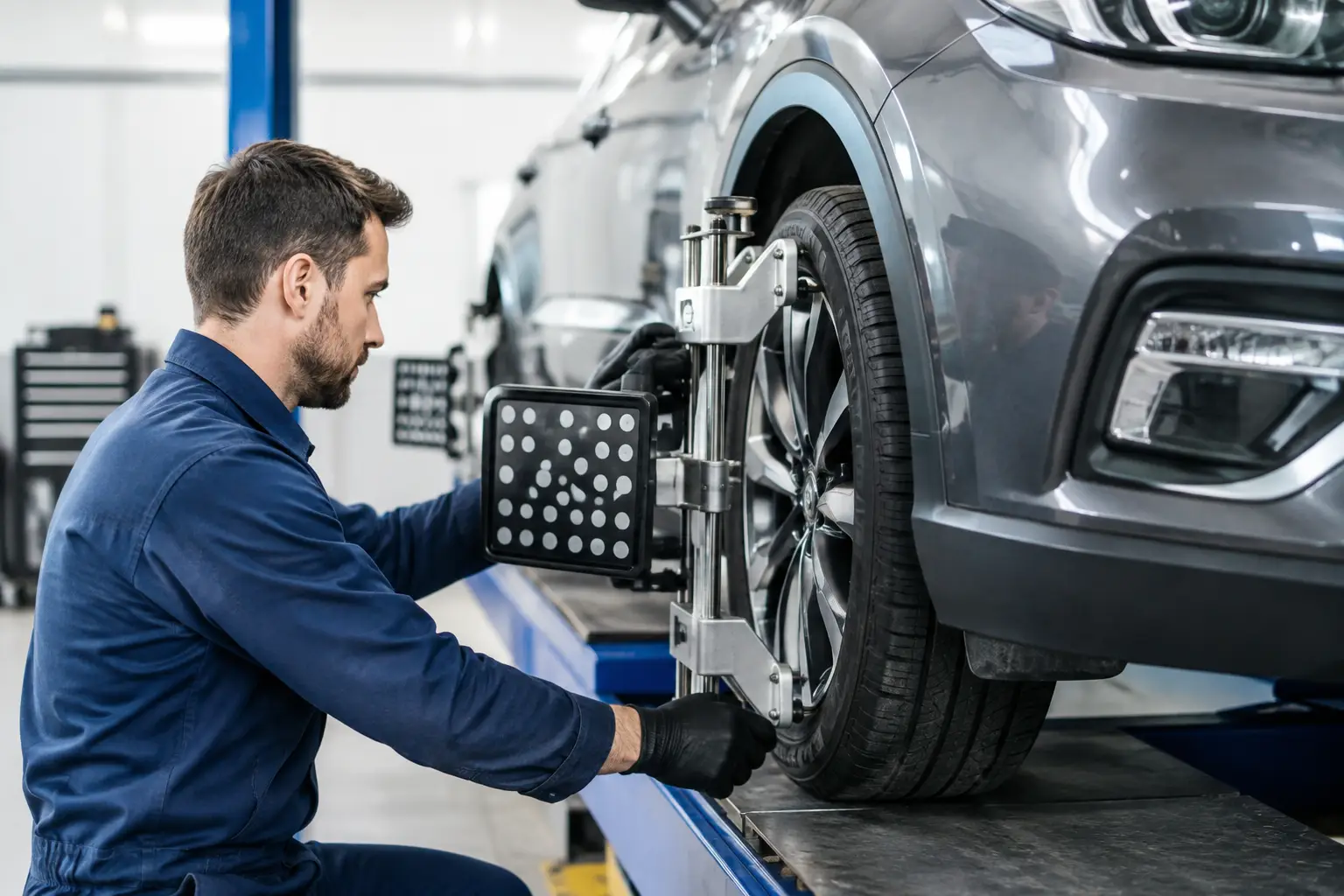
A steering wheel that sits crooked on a straight Flint road may seem like a small annoyance. It can also be an early warning that your tires, suspension, and steering system are no longer working together as intended. A professional wheel alignment service Flint drivers can rely on helps protect tire life, improve control, and make everyday driving feel more stable and predictable.
Alignment is not just a tire service. It is a precise adjustment of the angles that guide how your wheels meet the road. When those angles are off, even slightly, the effects can build quickly – especially through Michigan potholes, rough pavement, curb contact, and changing seasonal conditions.
What a Wheel Alignment Actually Corrects
Wheel alignment adjusts your vehicle’s suspension geometry so the wheels are positioned to manufacturer specifications. The technician is not simply pointing the tires straight ahead. Using alignment equipment, they measure and adjust angles that affect how the vehicle tracks, turns, and wears its tires.
The main measurements are camber, caster, and toe. Camber is the inward or outward tilt of a wheel when viewed from the front. Caster affects steering stability and how the wheel returns after a turn. Toe describes whether the tires point slightly toward or away from each other. These settings vary by vehicle, so the goal is not a one-size-fits-all position. The goal is the correct setting for your specific vehicle.
A proper alignment can reduce uneven tire wear, help the vehicle hold a straighter path, and support more confident steering. It can also prevent a small problem from turning into an early tire replacement or a more involved suspension repair.
Signs You May Need Wheel Alignment Service in Flint
Some alignment problems are obvious, but many begin gradually. You may get used to making small steering corrections without realizing your vehicle is drifting. Paying attention to changes in how it drives can help you schedule service before tire wear becomes expensive.
One common sign is a vehicle that pulls or drifts to one side on a reasonably level road. Road crown, wind, and tire pressure can affect tracking, so a pull does not always mean alignment is the cause. Still, it deserves an inspection, particularly if it happens consistently.
A crooked steering wheel is another frequent clue. If the wheel is turned left or right while the vehicle travels straight, an alignment check is a practical next step. Vibrations are less directly tied to alignment and may point to tire balance, tire damage, or worn steering and suspension parts. A qualified technician can tell the difference rather than guessing.
Look at your tires, too. Feathering, where the tread feels smooth in one direction and sharp in the other, can indicate an alignment issue. Excessive wear along the inner or outer edge is also a concern. Tires may still have visible tread across most of the surface while being unsafe or close to replacement at the edges.
Why Flint Roads Can Affect Alignment
A hard impact with a pothole, curb, or road debris can knock alignment angles out of specification. It does not always take a major crash. One sharp hit can be enough, particularly on a vehicle with lower-profile tires or aging suspension components.
Winter adds another layer of wear. Freeze-thaw cycles can worsen pavement damage, while snow-covered roads can hide potholes and curbs. Spring is a smart time to have the steering, suspension, tires, and alignment checked if your vehicle has taken a few hard hits over the season.
Normal wear matters as well. Ball joints, tie rods, control arm bushings, struts, shocks, and wheel bearings all help keep the wheels properly located. If one of these components has excessive play or damage, an alignment may not hold. The right repair is to identify and address the worn part first, then perform the alignment.
Alignment, Tire Balance, and Rotation Are Different Services
These services often come up at the same visit, but they solve different problems. Alignment sets the direction and angle of the wheels. Tire balancing distributes weight around the wheel-and-tire assembly to reduce vibration at speed. Tire rotation moves tires to different positions so they wear more evenly over time.
A vehicle can need one service without needing all three. For example, a steering wheel vibration at highway speed may call for tire balancing or a tire inspection, not alignment. A vehicle with uneven edge wear and a pull may need alignment, but tire rotation alone will not correct the cause.
Combining services can make sense when the maintenance schedule and tire condition support it. The important part is receiving a clear explanation of what the vehicle needs now, what can wait, and why. That helps you make an informed decision without paying for unnecessary work.
What to Expect From a Professional Alignment Inspection
A thorough wheel alignment appointment starts with more than connecting the vehicle to alignment equipment. The tires should be checked for condition, inflation, and unusual wear. The technician should also inspect key steering and suspension components. If a part is loose, bent, or worn, adjusting alignment settings around it may provide only a temporary result.
Once the vehicle is ready, computerized equipment measures the existing angles against manufacturer specifications. The technician makes available adjustments, then verifies the final readings. Some vehicles have limited adjustment range from the factory. If readings cannot be brought into specification, the inspection may reveal a bent component, collision damage, or a suspension issue that needs further repair.
This is especially valuable after a collision or curb impact. Alignment concerns can overlap with body or frame damage, and a shop with mechanical and collision capabilities can evaluate the full picture. At DNC Auto Repair, the focus is on explaining the findings clearly, including whether an alignment is appropriate now or whether another repair should come first.
How Often Should You Schedule an Alignment?
There is no single mileage interval that fits every driver. Many vehicles benefit from an alignment check about once a year, during tire replacement, or whenever new tires are installed. It is also wise to schedule an inspection after a significant pothole strike, curb impact, suspension repair, or collision.
Your driving habits matter. Commuters who travel rough roads every day, drivers who carry heavy loads, and households with older vehicles may need checks more often. On the other hand, a newer vehicle driven mostly on smooth roads may stay within specification longer.
Do not wait solely for a warning light. Most vehicles do not have a dashboard light specifically for wheel alignment. Tire wear and steering feel are usually the first signs that something needs attention.
Protecting Your Tires Between Alignment Visits
Keeping tires properly inflated is one of the easiest ways to get better wear and handling. Check pressure when the tires are cold and use the pressure listed on the driver’s door placard, not the maximum pressure printed on the tire sidewall. Inspect the tread periodically for edge wear, cuts, bulges, nails, or uneven patterns.
It also helps to slow down for potholes when it is safe to do so and avoid rubbing or climbing curbs. These habits cannot prevent every issue, but they reduce the hard impacts that can affect tires, wheels, and suspension parts.
If your vehicle is pulling, the steering wheel is off-center, or your tires are wearing unevenly, an alignment inspection can provide a straightforward answer. Addressing it early gives you a better chance of protecting the tires you already own and keeping your next trip across Flint a little safer and less stressful.