



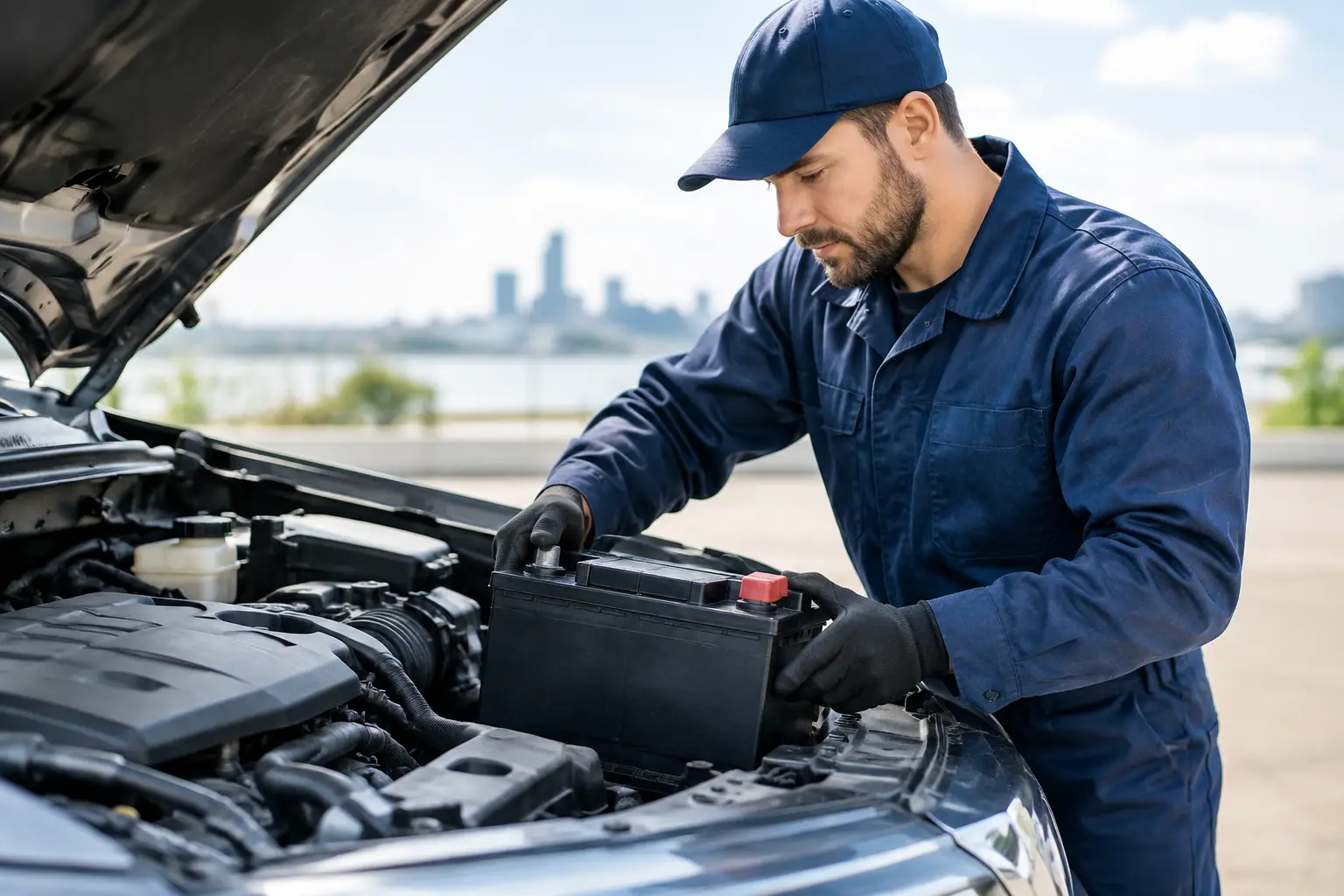
A vehicle that will not start can derail a workday, a school drop-off, or an appointment before it even begins. When you need car battery replacement Flint drivers can rely on, the goal is not simply to install a new battery. It is to find out why the vehicle would not start, choose the correct battery, and make sure the charging system is doing its job.
A weak battery can give a few warnings, but it can also fail with little notice, especially during a Michigan cold snap. Knowing what to watch for can help you schedule service before you are left stranded in a driveway or parking lot.
Signs Your Car Battery Is Nearing the End
Slow cranking is one of the most common signs. When you turn the key or press the start button, the engine may take longer than usual to turn over. You might hear a sluggish, dragging sound before it starts. That does not always mean the battery is the only problem, but it is a good reason to have it tested.
Dim headlights, flickering interior lights, or power accessories that seem weaker than normal can also point to low battery voltage. Modern vehicles depend on steady electrical power for far more than starting. A low battery may affect power windows, infotainment systems, dashboard displays, remote locks, and electronic safety features.
Other warning signs include a battery warning light, needing frequent jump-starts, a swollen battery case, corrosion around the terminals, or an unusual sulfur-like smell under the hood. A bulging case or strong odor deserves prompt attention. Heat, overcharging, and internal battery damage can create a safety concern.
Battery age matters too. Many car batteries last roughly three to five years, but Flint weather, short trips, extreme temperatures, and electrical demands can shorten that range. If your battery is approaching that age, testing it during routine maintenance is a practical way to avoid surprises.
Why a Battery Test Comes Before Replacement
Replacing a battery without checking the rest of the starting and charging system can waste money. A vehicle may have a weak battery because the alternator is not charging properly, a cable connection is loose or corroded, a starter is drawing too much power, or an electrical component is draining the battery after the vehicle is parked.
A proper inspection checks battery voltage and available starting power, then looks at the battery terminals, cables, alternator output, and related connections. If the battery tests weak and the charging system is healthy, replacement is usually the straightforward fix. If another issue is found, addressing the source of the problem helps protect the new battery from the same early failure.
This matters even more if your vehicle has been jump-started more than once. A jump-start can get you moving temporarily, but it does not identify the cause. Repeated jump-starts can also be hard on the battery and may mask an underlying charging or electrical issue.
Choosing the Right Replacement Battery
Not every battery fits every vehicle. The correct choice depends on the battery group size, terminal layout, cold cranking amps, reserve capacity, and the vehicle manufacturer’s specifications. Installing a battery that is too small or has insufficient starting power can lead to hard starts and a shorter service life.
Cold cranking amps are especially relevant in Michigan. This rating measures how much starting power a battery can provide in cold temperatures. A battery with the appropriate rating gives the engine a better chance of starting on cold Flint mornings, when engine oil is thicker and batteries naturally lose some available power.
Vehicle technology also affects the decision. Cars with automatic start-stop systems, extensive electronics, or higher electrical loads may require an absorbed glass mat, or AGM, battery. AGM batteries usually cost more than conventional flooded batteries, but they are designed to handle deeper cycling and frequent starts. The best option depends on what your vehicle was built to use. Choosing a cheaper battery that does not meet the vehicle’s needs can cost more later.
In some vehicles, the replacement battery also needs to be registered or reset in the vehicle’s battery management system. This lets the charging system adjust to the new battery and can help extend its lifespan. It is one more reason professional installation can be worth considering on newer vehicles.
Car Battery Replacement in Flint: What Service Should Include
A careful car battery replacement in Flint should start with a test, not a guess. Once replacement is confirmed, the technician should verify the right battery specifications, remove the old battery safely, clean corrosion from the terminals and cable ends, secure the new battery properly, and test starting and charging performance afterward.
The hold-down hardware is not a minor detail. A battery that shifts under the hood can damage its case, stress the cables, and create electrical problems. Terminal connections should be clean and tight, and the battery should be mounted securely in its tray.
Transparent service also means explaining what was found. If the battery failed because of age, that is different from a battery that was drained by a faulty alternator or a parasitic electrical draw. Knowing the difference helps you make an informed repair decision rather than replacing parts blindly.
At DNC Auto Repair, certified technicians can test the battery and charging system, explain the results clearly, and help determine whether a replacement battery is the right repair for your vehicle. That approach is useful whether your vehicle is completely dead or simply showing early signs of a weak battery.
When to Replace It and When a Charge May Be Enough
A discharged battery is not always a failed battery. Leaving a dome light on, a vehicle sitting unused for an extended period, or several short trips can drain a healthy battery. If testing shows the battery can hold a charge and deliver proper starting power, charging it may be enough.
Replacement is usually the better choice when the battery cannot hold a charge, has poor load-test results, is damaged, leaks, has a swollen case, or is near the end of its expected life and causing starting problems. A battery may recover enough to start after charging, yet still lack the reserve capacity needed for reliable daily driving.
There is a trade-off in waiting. You may get a few more starts from an aging battery, but the risk is that it fails when you need the car most. For commuters, families, and anyone who depends on a vehicle every day, replacing a clearly weak battery before winter is often the less stressful choice.
Simple Habits That Help Your New Battery Last
A new battery still needs the right conditions to perform well. Make sure lights and accessories are turned off when parking, especially if the vehicle will sit overnight. Try to take occasional longer drives if most of your trips are only a few minutes, since short trips may not give the alternator enough time to fully recharge the battery after starting.
Keep the top of the battery clean and have corrosion checked when you are in for oil changes or other maintenance. If you store a seasonal vehicle or do not drive often, a quality battery maintainer may help prevent deep discharge. It should be used correctly and only with a battery that is in good condition.
If the battery warning light comes on while driving, do not assume the battery itself is the only issue. That light often points to a charging-system problem. Have the vehicle inspected soon, because it may continue running only until the remaining battery power is depleted.
A reliable start begins with more than a new part. When your car cranks slowly, needs a jump, or shows electrical warning signs, a timely battery and charging-system check can turn a stressful breakdown risk into a clear, manageable repair.
Leave a Reply