



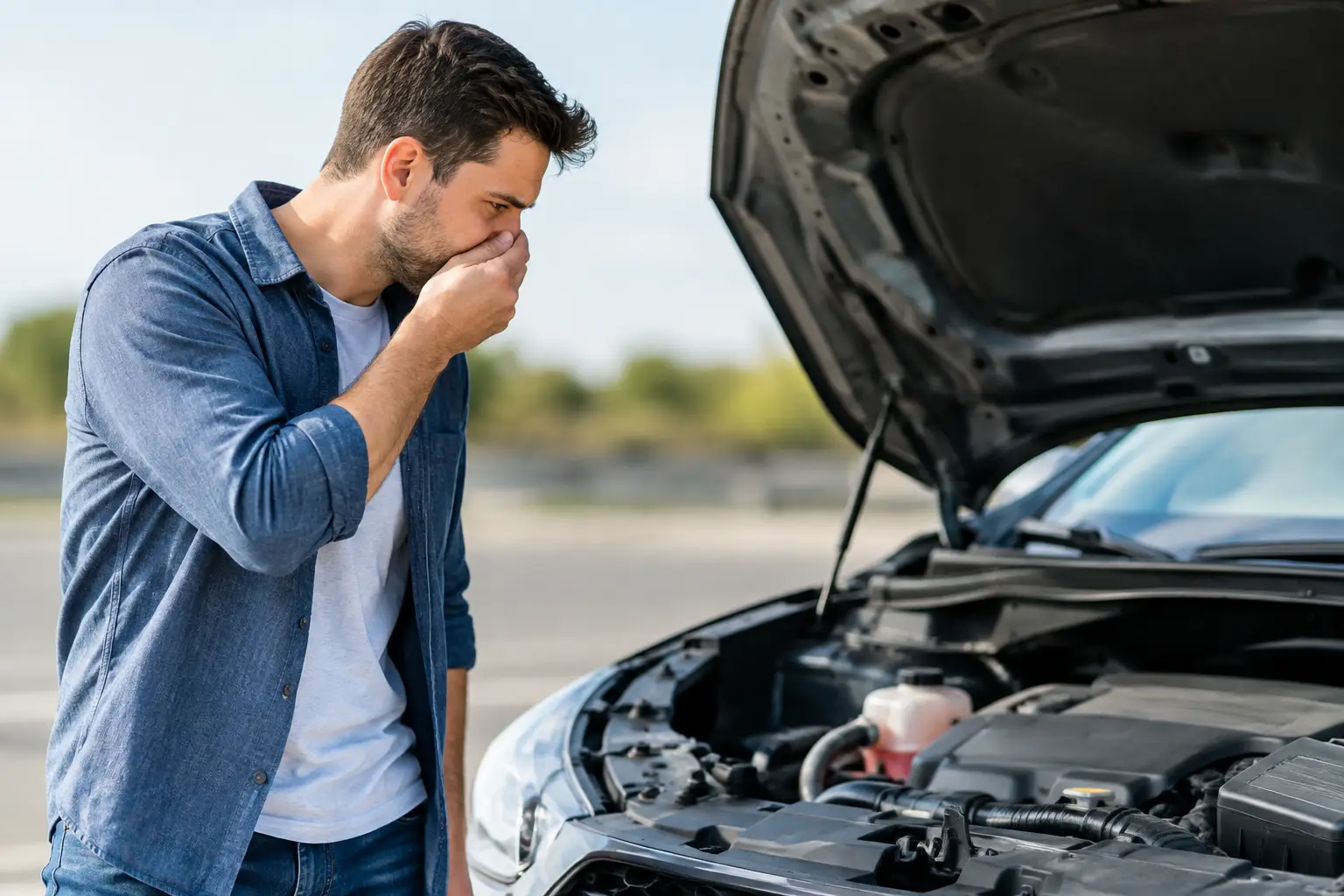
Drivers who search “why car smells gasoline” are usually dealing with more than an annoying odor. A brief fuel smell near the pump can happen after filling up, but gasoline odors inside the cabin, under the hood, or around a parked vehicle can point to a leak or fuel-system problem. Because gasoline is highly flammable, this is one smell that deserves prompt attention.
The good news is that a gasoline odor does not automatically mean a major repair. It may be something as simple as a loose gas cap or a worn seal. Still, the only safe way to know is to have the vehicle inspected, especially if the smell is strong, persistent, or accompanied by a warning light, rough running, or visible fuel.
Why Your Car Smells Gasoline
A vehicle’s fuel system is designed to keep gasoline and fuel vapors contained from the tank to the engine. When a hose, seal, cap, line, or valve no longer seals correctly, vapors can escape. Since gasoline has such a distinct odor, drivers often notice even a small problem before they see other symptoms.
Where you smell the odor matters. Gasoline near the rear of the vehicle may be related to the fuel tank, filler neck, fuel cap, or vapor-control system. A smell under the hood can come from fuel injectors, fuel lines, or the fuel rail. If the odor is strongest inside the cabin, vapors may be entering through the ventilation system, a damaged seal, or an opening in the body or floor area.
A Loose or Damaged Gas Cap
Start with the simplest possibility. A gas cap that is loose, cracked, missing its sealing gasket, or not designed for the vehicle can allow fuel vapors to escape. This may be most noticeable after a fill-up or on warm days, when vapors expand.
Remove the cap and inspect its rubber seal for cracks, flattening, or damage. Reinstall it until it clicks securely. If the smell continues after a few trips, or the check engine light is on, the cap may not be the whole issue. Modern vehicles monitor the fuel-vapor system closely, so even a small leak can trigger a fault code.
Fuel Spilled During Fill-Up
A small amount of fuel spilled on the outside of the vehicle, on your shoes, or near the filler opening can create a temporary odor. Overfilling the tank can also push fuel into parts of the vapor-control system that are meant to handle vapor, not liquid fuel.
If the smell appeared immediately after fueling and fades within a short time, spilled fuel may be the explanation. Do not keep topping off the tank once the pump clicks off. If the odor remains for days, becomes stronger, or appears away from the gas station, schedule an inspection.
A Leak in a Fuel Line, Injector, or Fuel Tank
Fuel leaks are a more serious cause of a gasoline smell. Rubber hoses can dry out and crack with age. Metal fuel lines can corrode, particularly on vehicles exposed to Michigan winter road salt. Fuel injector seals can harden and leak around the engine, while damage to the fuel tank or filler neck can release fuel and vapors near the rear of the vehicle.
Not every leak leaves a puddle. Some only release vapor, or they seep slowly enough that fuel evaporates before reaching the ground. A strong smell after the vehicle has been parked, wet spots beneath the car, reduced fuel economy, hard starting, or visible moisture around fuel-system components are all reasons to have the vehicle checked right away.
An EVAP System Problem
The evaporative emissions control system, often called the EVAP system, captures gasoline vapors from the fuel tank and routes them into the engine to be burned. It includes hoses, a charcoal canister, purge valve, vent valve, and other components that must seal properly.
A cracked EVAP hose, stuck purge valve, damaged charcoal canister, or faulty vent valve can cause a fuel-vapor odor and may turn on the check engine light. These issues can be difficult to identify by sight alone. A proper diagnostic inspection may include checking fault codes and testing the system for vapor leaks.
Engine Running Too Rich
If an engine receives more fuel than it can burn efficiently, unburned fuel can create a gasoline-like smell from the exhaust. You may also notice poor gas mileage, a rough idle, black exhaust smoke, hesitation, or a check engine light.
Possible causes include a failing oxygen sensor, mass airflow sensor issue, leaking injector, ignition problem, or another engine-management fault. This is different from a simple vapor leak because the odor often comes with drivability symptoms. Continuing to drive can waste fuel and, in some cases, damage the catalytic converter.
Exhaust Leaks Can Carry Fumes Into the Cabin
Sometimes the issue is not gasoline leaking from the fuel system. An exhaust leak near the engine or beneath the vehicle can allow exhaust fumes into the passenger area. Those fumes may smell like raw fuel, especially when the engine is cold or running rich.
An exhaust leak is a safety concern because exhaust can contain carbon monoxide, an odorless gas. If you smell fumes in the cabin, feel dizzy or nauseated, or notice the odor worsening while idling, pull over safely, get fresh air, and arrange for service rather than continuing your trip.
When a Gasoline Smell Means Do Not Drive
Use caution if the smell is strong enough to notice immediately when you approach the vehicle. Do not assume the odor will go away on its own, particularly if it is paired with a fuel puddle, visible dripping, smoke, or an active fuel leak.
Avoid driving and arrange for a tow when you notice any of these conditions:
- Fuel is dripping, pooling, or visibly leaking from the vehicle.
- The gasoline smell is strong inside the cabin or under the hood.
- You see smoke, notice a burning smell, or suspect fuel has contacted hot engine or exhaust components.
- The vehicle is running poorly, stalling, or has a flashing check engine light.
- You feel lightheaded, nauseated, or develop a headache while inside the vehicle.
Do not smoke, use an open flame, or start the vehicle repeatedly to “see if it clears up.” Park away from buildings and other vehicles if it can be done safely. Gasoline vapors can ignite more easily than many drivers realize.
What a Professional Inspection Should Check
A fuel odor can have several possible sources, so replacing parts based on guesswork is rarely the best value. A technician should first confirm where the odor is strongest and inspect the fuel tank area, filler neck, cap, visible lines, connections, and engine-bay components for signs of leaks or staining.
Diagnostics may also include scanning for check engine codes, checking fuel pressure, inspecting injector seals, and testing the EVAP system. A smoke test can be particularly useful for locating small vapor leaks that are not obvious during a visual inspection. If exhaust fumes may be entering the cabin, the exhaust system and vehicle body sealing should be checked as well.
The repair depends on the cause. It could be a new gas cap, hose, clamp, injector seal, EVAP valve, fuel line, or a repair to the tank or filler neck. Corroded parts may require more extensive work than a loose connection, which is why a clear explanation and estimate before repairs begin matter.
Can You Keep Driving With a Gasoline Smell?
It depends on the source and severity, but a persistent gasoline smell should not be treated as normal. A mild odor right after fueling may fade quickly. A recurring smell, an odor inside the cabin, or any sign of a leak calls for service soon, even if the car seems to drive normally.
For Flint-area drivers, seasonal temperature swings and road salt can be hard on older fuel lines, exhaust components, and underbody hardware. At DNC Auto Repair, technicians can inspect the fuel, EVAP, engine, and exhaust systems to identify the real cause and explain the repair in plain language.
Trust your senses here. If your car smells like gasoline more than once, schedule an inspection before a small vapor leak, fuel-system fault, or exhaust issue has a chance to become a bigger safety problem.
Leave a Reply