



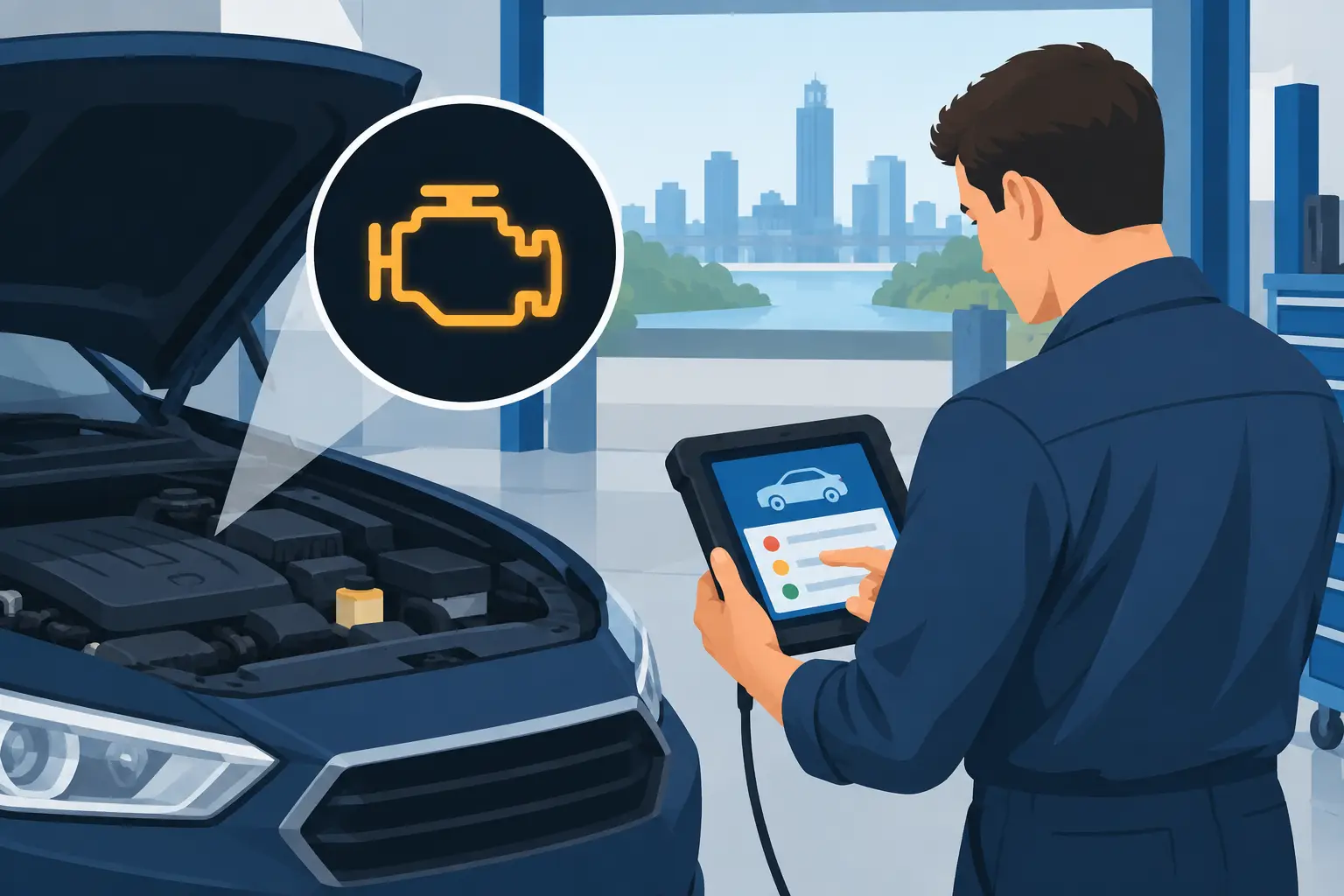
A check engine light can turn an ordinary drive through Flint into a stressful guessing game. It may come on without any obvious change in how your vehicle runs, or it may appear with rough idling, weak acceleration, poor fuel economy, or a fuel smell. The right check engine light diagnosis Flint drivers need is not a quick guess or a parts swap. It is a careful process that finds the cause, explains the repair clearly, and helps you make a sound decision for your vehicle and budget.
What Your Check Engine Light Is Telling You
Your vehicle’s onboard computer monitors many systems related to engine operation and emissions. When it detects a reading outside the expected range, it stores a diagnostic trouble code and turns on the check engine light. That code is a useful starting point, but it does not automatically identify the failed part.
For example, a code related to an oxygen sensor may be caused by the sensor itself, damaged wiring, an exhaust leak, a vacuum leak, or an engine condition that is affecting the sensor reading. Replacing the sensor without testing the system could leave the original issue unresolved.
The warning light may also be connected to problems that feel unrelated to the engine, including a loose gas cap, EVAP system leak, ignition misfire, fuel delivery problem, catalytic converter concern, electrical fault, or air intake issue. Some repairs are relatively simple. Others need more detailed testing before a repair recommendation can be made.
A Steady Light vs. a Flashing Light
The way the check engine light appears matters.
A steady check engine light usually means the computer has detected a fault that needs attention but may not require pulling over immediately. Your vehicle may still be safe to drive for a short time, depending on how it feels. Even so, it is smart to schedule diagnostics soon. Waiting too long can allow a minor issue to become more expensive, reduce fuel economy, or create an emissions-test problem.
A flashing check engine light is more urgent. It often indicates an active misfire that can send unburned fuel into the exhaust system and damage the catalytic converter. If the light is flashing, reduce speed, avoid hard acceleration, and pull over safely if the vehicle is running poorly. Continuing to drive can turn an ignition repair into a much larger exhaust repair.
You should also stop driving and arrange service promptly if the check engine light appears with overheating, low oil pressure, heavy smoke, loud engine noise, a strong fuel odor, or a major loss of power. Those symptoms may point to a problem that needs immediate attention beyond the warning light itself.
Why a Code Scan Is Not the Same as Diagnosis
Many drivers have had a code read at a parts store or used a basic scanner at home. That information can be helpful, especially when deciding whether the vehicle needs service right away. But a code scan alone is not a complete diagnosis.
A professional technician uses the code along with live data, freeze-frame information, visual inspection, electrical testing, and vehicle-specific service procedures. Freeze-frame data records conditions present when the fault occurred, such as engine temperature, vehicle speed, fuel trim, and RPM. Those details can help narrow down an intermittent problem that may not be happening while the vehicle is in the shop.
The technician may test for vacuum leaks, inspect connectors and wiring, check ignition components, measure fuel pressure, inspect exhaust leaks, or verify sensor signals. The exact steps depend on the code, vehicle make and model, mileage, maintenance history, and symptoms you have noticed.
This approach takes more care than simply installing the part named in a code description, but it helps prevent wasted repairs. It also gives you a clearer answer about what is wrong, what needs to be fixed now, and what can be monitored.
Common Causes of Check Engine Lights in Flint
Flint drivers put their vehicles through demanding year-round conditions. Cold starts, potholes, stop-and-go traffic, road salt, and changing temperatures can all expose existing weaknesses in a vehicle’s systems.
A loose or damaged fuel cap is one common reason for a check engine light. If the cap does not seal correctly, the evaporative emissions system may detect a leak. Tightening the cap may help in some cases, but the light may not turn off immediately, and a cracked cap or another EVAP leak still needs testing.
Misfires are another frequent concern. Worn spark plugs, failing ignition coils, damaged plug boots, fuel injector issues, or air leaks can cause a cylinder to misfire. Drivers may notice shaking at idle, hesitation while accelerating, or a flashing warning light.
Sensor and wiring faults are also common, particularly as a vehicle ages. Oxygen sensors, mass airflow sensors, crankshaft sensors, and other components must send accurate information to the computer. The component may fail, but corrosion, rodent damage, loose connections, or damaged wiring can create similar trouble codes.
Exhaust leaks deserve attention as well. Rust is a reality for Michigan vehicles, and a leak before an oxygen sensor can affect its readings. Depending on the location and severity, exhaust damage may contribute to a check engine light, noise, fumes, or reduced performance.
What to Expect From a Check Engine Light Diagnosis in Flint
A good diagnostic appointment begins with listening. The details you provide can save time and help pinpoint the problem. Let the technician know when the light came on, whether it flashes, what the vehicle was doing at the time, and any changes in performance, noise, odor, or fuel use.
At DNC Auto Repair, the goal is to identify the cause before recommending a repair. Certified, experienced technicians use modern diagnostic equipment and hands-on testing to evaluate the vehicle rather than relying on the code alone. If a repair is needed, you should receive a straightforward explanation of the issue, the recommended work, and the expected cost.
Sometimes diagnosis finds a simple repair with a clear answer. Other times, the first test may reveal the need for additional inspection. That is not a sign that anyone is guessing. Complex electrical and drivability concerns can have more than one possible cause, and responsible testing follows the evidence instead of replacing parts at random.
Do Not Clear the Light Before Service
It can be tempting to disconnect the battery or use a scanner to clear the warning light. Doing so may temporarily turn the light off, but it does not repair the problem. It can also erase stored information that helps a technician understand what happened.
Clearing the light may reset your vehicle’s emissions readiness monitors. If you need an emissions-related inspection, those monitors may need time and a specific amount of driving before they reset. More importantly, the light may return after the underlying fault is detected again.
If the light came on and then went off by itself, it is still worth having the vehicle checked, especially if it has happened more than once. Intermittent faults often become easier to identify when diagnostic history remains available.
How to Protect Your Vehicle After the Repair
Once the cause has been corrected, regular maintenance can help reduce the chance of future warning lights. Follow the recommended schedule for oil changes, spark plug replacement, air filter service, and fluid inspections. Address small changes in performance before they become major problems.
Pay attention to fuel economy, starting behavior, idle quality, and unusual exhaust noise. These changes do not always mean a serious repair is ahead, but they are useful early warnings. Keeping records of recent repairs and maintenance also helps technicians see the full picture when a new concern develops.
A check engine light does not have to mean the worst-case scenario. Treat it as your vehicle asking for attention, get a proper diagnosis, and you will be in a much better position to protect your safety, your time, and your repair budget.
Leave a Reply