



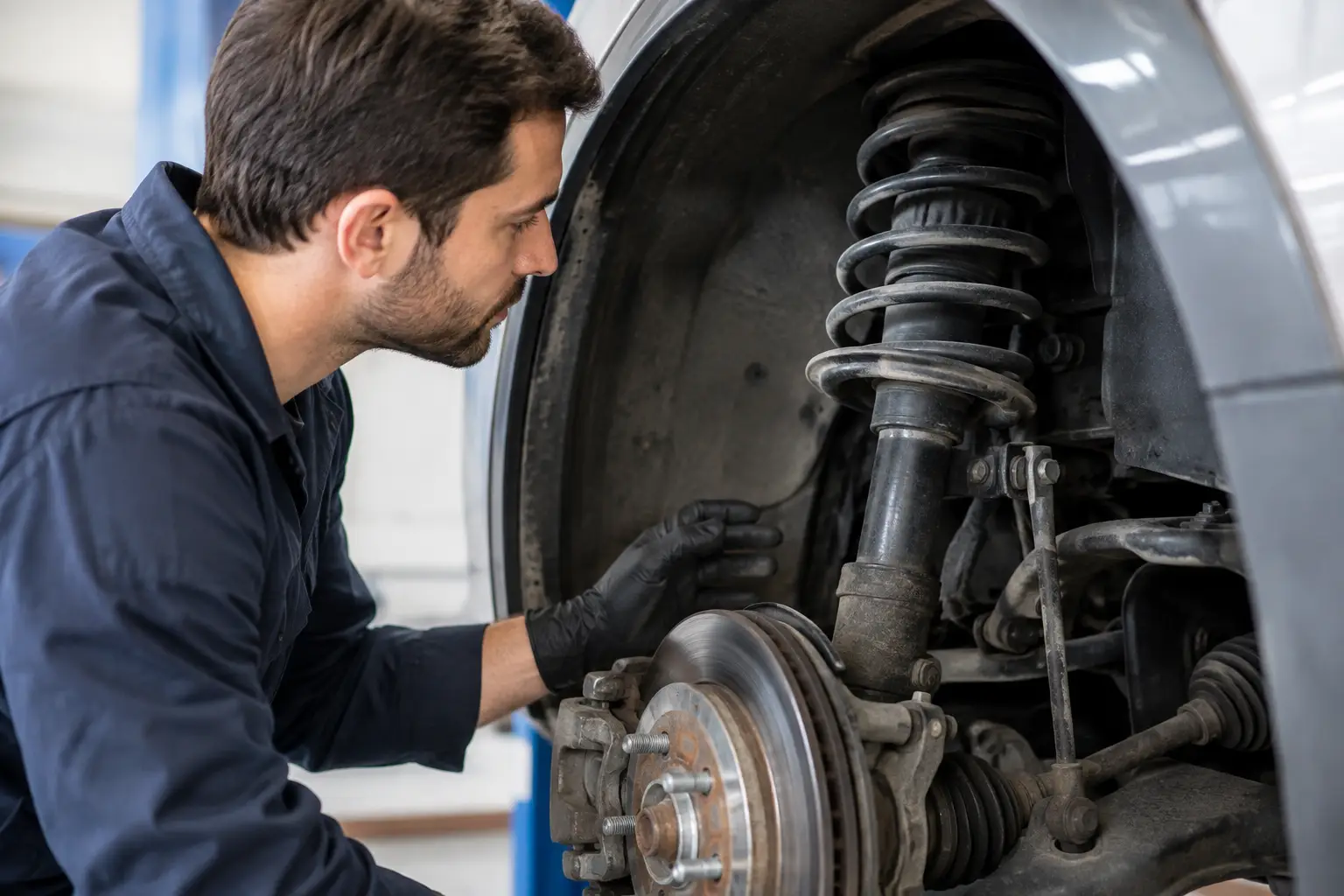
A sharp bump over a Flint pothole is one thing. A vehicle that keeps bouncing after the bump, pulls during braking, or feels unsettled on a familiar road is another. The best worn strut warning signs often show up gradually, which makes them easy to dismiss until handling and tire wear become bigger problems.
Struts are part of your vehicle’s suspension system. They help support the vehicle, control spring movement, and keep the tires in steady contact with the road. When a strut wears out, your car may still start and drive, but it may no longer respond as safely or predictably as it should. That matters on wet roads, during emergency stops, and throughout Michigan’s rough winter and pothole season.
Best Worn Strut Warning Signs Drivers Should Know
A worn strut does not always create one obvious symptom. Instead, it can affect ride comfort, braking, steering, alignment, and tire life at the same time. Paying attention to changes in how your vehicle feels can help you schedule service before the issue leads to extra repairs.
Excessive bouncing after bumps
One of the most familiar signs is repeated bouncing after crossing a bump, railroad track, or dip in the road. A healthy suspension settles quickly. If the front or rear of the vehicle continues moving up and down, the struts may no longer be controlling the springs effectively.
You might also notice more body roll when turning or a floating feeling at highway speeds. Those changes are more than an annoyance. When the vehicle moves excessively, the tires can lose some of their firm contact with the pavement, reducing grip when you need it most.
Nose-diving when you brake
If the front end drops noticeably during normal braking, worn front struts could be part of the problem. Some forward weight transfer is normal, especially in a heavier vehicle. The concern is a sudden change in braking feel or a dive that seems more pronounced than it used to be.
Bad struts can make the vehicle feel less stable during a hard stop and may increase the distance required to stop in certain conditions. Brake problems, worn control-arm components, and tire issues can create similar concerns, so a proper inspection is better than assuming the struts are the only cause.
Cupped, scalloped, or uneven tire wear
Look closely at your tires when checking air pressure or washing the vehicle. Tires that show alternating high and low patches across the tread may be cupped or scalloped. This pattern can occur when a worn strut allows the tire to bounce instead of maintaining even road contact.
Uneven wear is not proof by itself. Incorrect alignment, worn ball joints, loose steering parts, and improperly inflated tires can also shorten tire life. Still, when unusual tread wear appears along with a bouncy ride, a suspension check is a smart next step. Replacing tires without correcting the underlying cause can leave you facing the same expensive wear pattern again.
Clunking, rattling, or knocking over rough roads
A clunk from the front end when driving over potholes or entering a driveway can point to a worn strut mount, loose hardware, a damaged coil spring, or another suspension component. The strut itself may not be the only part at fault, but these components work closely together and should be inspected as a system.
Noise is worth checking promptly because it is difficult to diagnose accurately from sound alone. A loose sway-bar link may produce a similar rattle, while a worn mount may make noise when steering. An experienced technician can inspect the vehicle safely on a lift and identify the actual source rather than replacing parts based on a guess.
Steering that feels loose, wandering, or unstable
Your vehicle should track predictably in its lane with normal steering corrections. If it wanders, feels vague around center, or needs frequent small adjustments on the highway, worn struts may be contributing to the problem. A vehicle can also feel unsettled when crossing uneven pavement or when a strong gust hits it.
Because steering concerns can involve tires, alignment, steering linkage, wheel bearings, or suspension parts, do not wait for the problem to become severe. If the vehicle pulls suddenly, the steering wheel shakes heavily, or control feels compromised, avoid unnecessary driving and arrange an inspection as soon as possible.
Fluid leaking from the strut body
Many struts are filled with hydraulic fluid. A light film of dirt and moisture on suspension parts is common, but visible wetness or fluid running down the outside of a strut can indicate a failing seal. Once a strut loses fluid, it cannot provide the damping control the suspension needs.
A leak is one of the clearer visual clues, but it still helps to have it confirmed. Fluid from another area can travel along components, and access can be limited when the vehicle is on the ground. A technician can inspect both sides of the vehicle and compare their condition.
Why Worn Struts Are More Than a Comfort Issue
It is easy to put off suspension work when the vehicle remains drivable. Unlike a no-start condition, worn struts often worsen slowly. The trade-off is that you may adapt to the rougher ride without realizing how much handling has changed.
Struts help the tires follow the road surface. When they are weak, the vehicle can bounce more over uneven pavement, squat during acceleration, and lean more in corners. This can affect confidence behind the wheel, particularly when carrying family members, hauling a load, or commuting in rain, snow, and slush.
Worn struts can also create costs beyond the struts themselves. Premature tire wear, added stress on mounts and springs, and alignment concerns may follow. Addressing the issue early may help protect the tires and help avoid replacing related parts after damage has progressed.
What a Suspension Inspection Should Check
A quality inspection should not begin and end with a quick bounce test in the parking lot. That test may reveal a severely weak strut, but modern suspension systems often need a closer look to identify the real cause of a handling complaint.
During an inspection, a technician should look for fluid leaks, damaged strut mounts, broken or sagging springs, worn bump stops, loose hardware, and play in related steering and suspension components. Tire condition and tread patterns matter too. If alignment angles are out of specification or the steering wheel is off-center, alignment measurements may be recommended after worn components are repaired.
Road testing can also help reproduce a noise, vibration, pull, or unstable feeling. Clear information from the driver makes that process more useful. Mention whether the issue happens during braking, turning, highway driving, or only after hitting bumps. If it began after striking a pothole or curb, share that as well.
Should You Replace One Strut or Both?
In most cases, struts should be replaced in pairs on the same axle. Replacing only one front strut can leave one side controlling movement differently from the other, which may affect handling and braking stability. The same principle applies to rear struts.
There are exceptions. If one strut was recently replaced and the matching unit is still in excellent condition, a technician can explain whether a single replacement is reasonable. The right choice depends on mileage, condition, vehicle design, budget, and the cause of the failure. Transparent recommendations should include what is worn now, what can wait, and why.
It is also common to inspect mounts, bearings, boots, and springs while the struts are apart. Reusing a clearly worn mount to save money upfront can mean paying for much of the same labor again later. On the other hand, not every surrounding part needs replacement automatically. The best repair plan is based on measured wear and the condition of your specific vehicle.
When to Schedule Service
Schedule a suspension inspection if you notice repeated bouncing, fluid leaks, new clunks, uneven tire wear, brake dive, or a vehicle that no longer feels stable. You do not need to diagnose the part yourself before calling. Describing the symptoms is enough to get the right inspection started.
For Flint-area drivers, DNC Auto Repair can inspect struts, tires, steering, and related suspension components, then explain the findings and repair options in plain language. A timely check can help you get back to a smoother, steadier ride and give you more confidence the next time the road does not cooperate.
Leave a Reply