



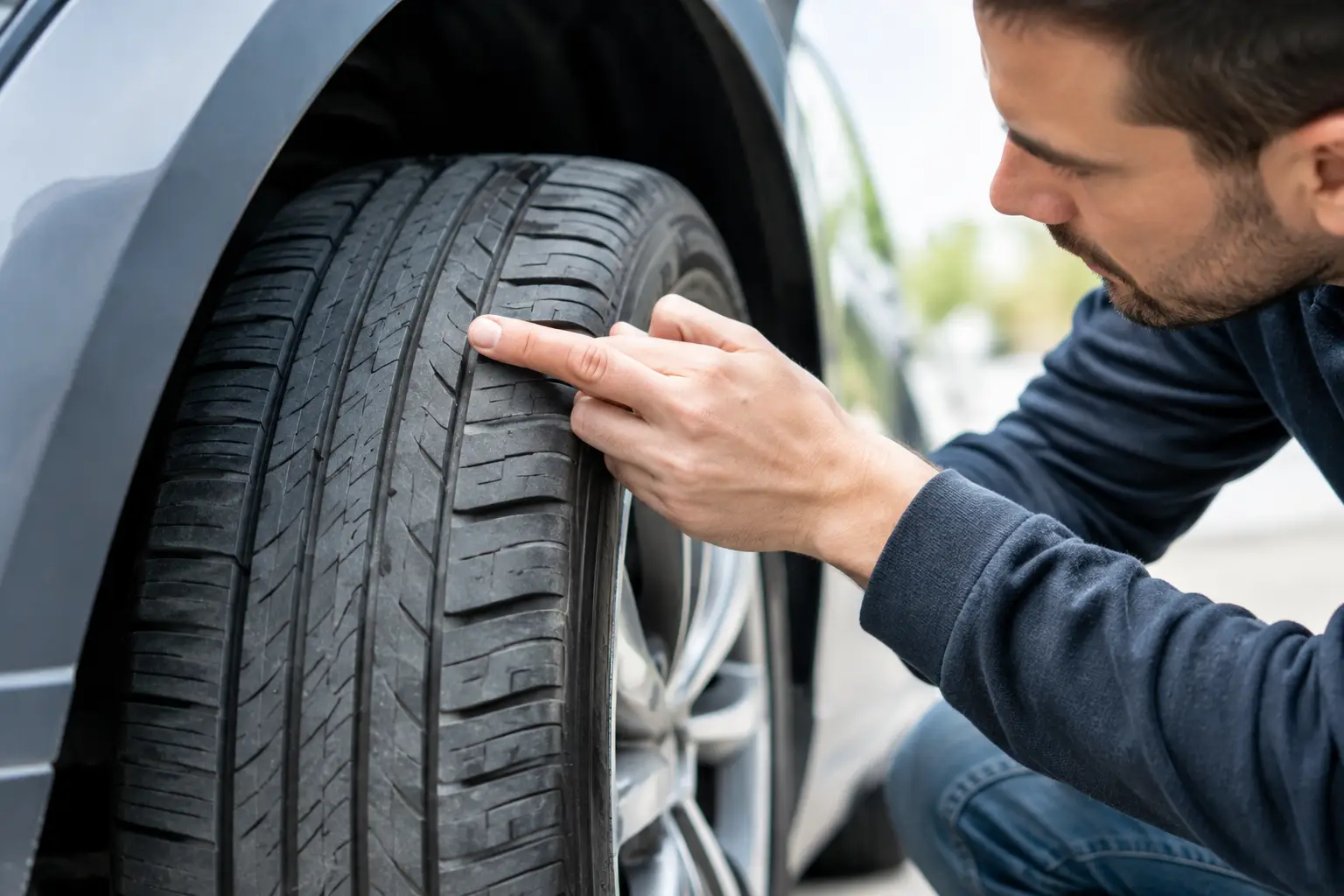
A tire can look fine from the driveway and still have too little grip for a wet Flint commute. Knowing how to check tire tread takes only a few minutes, and it can help you spot a safety issue before rain, snow, or a sudden stop exposes it.
Tread is the patterned rubber that channels water, slush, and debris away from the tire’s contact patch. As it wears down, your vehicle has less traction for braking, turning, and accelerating. Checking it regularly also gives you an early warning that something else may need attention, such as alignment, suspension, tire pressure, or rotation service.
Why tire tread matters in Michigan
Adequate tread is what helps a tire move water out from under itself. When tread is low, water can build between the tire and pavement, increasing the chance of hydroplaning. In winter, shallow tread has a harder time biting into snow and clearing slush.
The concern is not limited to dramatic weather. Worn tires can lengthen stopping distances on a damp road, make a vehicle feel less settled in turns, and reduce confidence during everyday driving. For families, commuters, and anyone relying on a vehicle to get to work, tire condition is a practical safety issue, not just a maintenance detail.
In the U.S., a tire is legally worn out at 2/32 of an inch of remaining tread. That is the minimum, not necessarily the point at which a driver should start planning. In an area with regular rain, snow, and changing temperatures, many drivers choose to replace tires before they reach that limit, especially if they notice reduced wet-weather traction.
How to check tire tread at home
Park on a level surface, put the vehicle in park or set the parking brake, and turn the steering wheel if needed to see the front tire more clearly. Look at every tire, including the inner and outer edges. The inside edge can wear faster and may be easy to miss when you only glance at the side facing out.
There are three useful ways to assess tread: built-in wear bars, the penny test, and a tread-depth gauge. Using more than one method gives you a clearer picture.
Look for the built-in tread wear bars
Most tires have small raised rubber bars set across the grooves between tread blocks. These are called tread wear indicators. Find the main grooves that run around the tire and look down into them. The bars may appear as narrow bridges across the groove.
When the tread surface is level with those bars, the tire has reached about 2/32 of an inch and should be replaced. If the tread is close to the bars, do not wait for a flat tire or bad weather to make the decision for you. Arrange a tire inspection and begin planning for replacement.
Use the penny test for a quick check
The penny test is a convenient screening method when a gauge is not available. Place a penny upside down into a main tread groove, with Lincoln’s head pointing down into the tire.
If the tread covers the top of Lincoln’s head, there is more than 2/32 of an inch of tread remaining. If you can see the top of his head, the tread is at or below the legal minimum. The tire should be replaced.
This test is helpful, but it has limits. It only tells you whether you are near the minimum depth, not whether the tire has enough tread for strong wet or snowy-road performance. It also will not reveal a pressure, alignment, or suspension problem unless you test several areas across the tire.
Get a more precise reading with a tread-depth gauge
An inexpensive tread-depth gauge provides a measurement in 32nds of an inch, making it the best option for routine home checks. Insert the gauge probe into a main groove, press the base flat against the tread, and read the measurement.
Take readings in at least three places across each tire: the inner edge, center, and outer edge. Then check several points around the circumference. Tread that is 6/32 or deeper generally has useful remaining life, although tire age, driving conditions, and visible damage still matter. At 4/32, it is wise to start planning, particularly before a Michigan winter. At 2/32, replacement is due.
Check for uneven wear, not just low tread
A tire can have acceptable depth in one spot and be unsafe in another. Uneven wear often points to a vehicle condition that should be corrected before new tires are installed. Otherwise, the same pattern may damage the replacement tires early.
Wear in the center of the tread often suggests chronic overinflation. Both outer shoulders wearing faster may indicate underinflation. One edge wearing more than the other can be a sign of incorrect wheel alignment, while cupping or scalloped dips across the tread may be related to worn suspension components, wheel balance, or other issues.
Run your hand gently over the tread with the tire cool. It should feel relatively even. Raised and lowered patches, sharp feathering along tread blocks, or a vibration while driving deserve professional attention. Also look for cuts, cracks, bulges, exposed cords, nails, and embedded debris. A bulge in the sidewall is especially serious and should not be ignored.
When to inspect your tires
Check tread about once a month and before a long road trip. It is also smart to inspect after hitting a pothole, curb, or road debris, or whenever the vehicle begins pulling to one side, vibrating, or handling differently.
Check tire pressure at the same time. Pressure should be measured when the tires are cold, using the recommended pressure listed on the driver’s door-jamb label. The number molded into the tire sidewall is the tire’s maximum pressure rating, not usually the pressure your vehicle should use.
Regular rotations help tires wear more evenly. Many vehicles benefit from rotation around every 5,000 to 7,500 miles, but the right interval depends on the vehicle, tire type, and manufacturer recommendations. Front-wheel-drive vehicles often wear front tires more quickly because those tires handle much of the steering, braking, and power delivery.
Do all four tires need replacement?
Not always. If one tire is damaged and the others have substantial, even tread remaining, a single replacement may be possible. But tire matching matters. Tires on the same axle should generally be the same size, type, and similar tread depth to support predictable handling and braking.
All-wheel-drive and four-wheel-drive vehicles require extra care. A significant difference in tire circumference caused by uneven tread depth can place strain on the drivetrain. Depending on the vehicle manufacturer’s specifications and the tread remaining on the other tires, replacing one tire may not be appropriate. A tire professional can measure the difference and explain the practical options.
When replacing only two tires, the newer pair is commonly installed on the rear axle to help maintain rear-end stability on wet roads. The right choice can vary by vehicle and tire condition, so ask for a clear explanation rather than assuming the most worn axle automatically gets the new tires.
When a professional tire inspection makes sense
A home tread check is useful, but it cannot diagnose every cause of tire wear. Schedule an inspection if you see uneven tread, the wear bars are close, the vehicle pulls or shakes, a tire loses air repeatedly, or you are unsure whether your tires are safe for another season.
At DNC Auto Repair, technicians can measure tread accurately, inspect for damage, and check related concerns such as alignment, suspension, and tire pressure. You should receive a straightforward explanation of what was found, what needs attention now, and what can be monitored so you can make an informed decision.
A few minutes spent checking your tires in the driveway can prevent a stressful surprise on the road. If the tread looks questionable, trust that observation and have it checked before the next hard rain, snowfall, or highway trip asks more from your tires than they can safely deliver.