



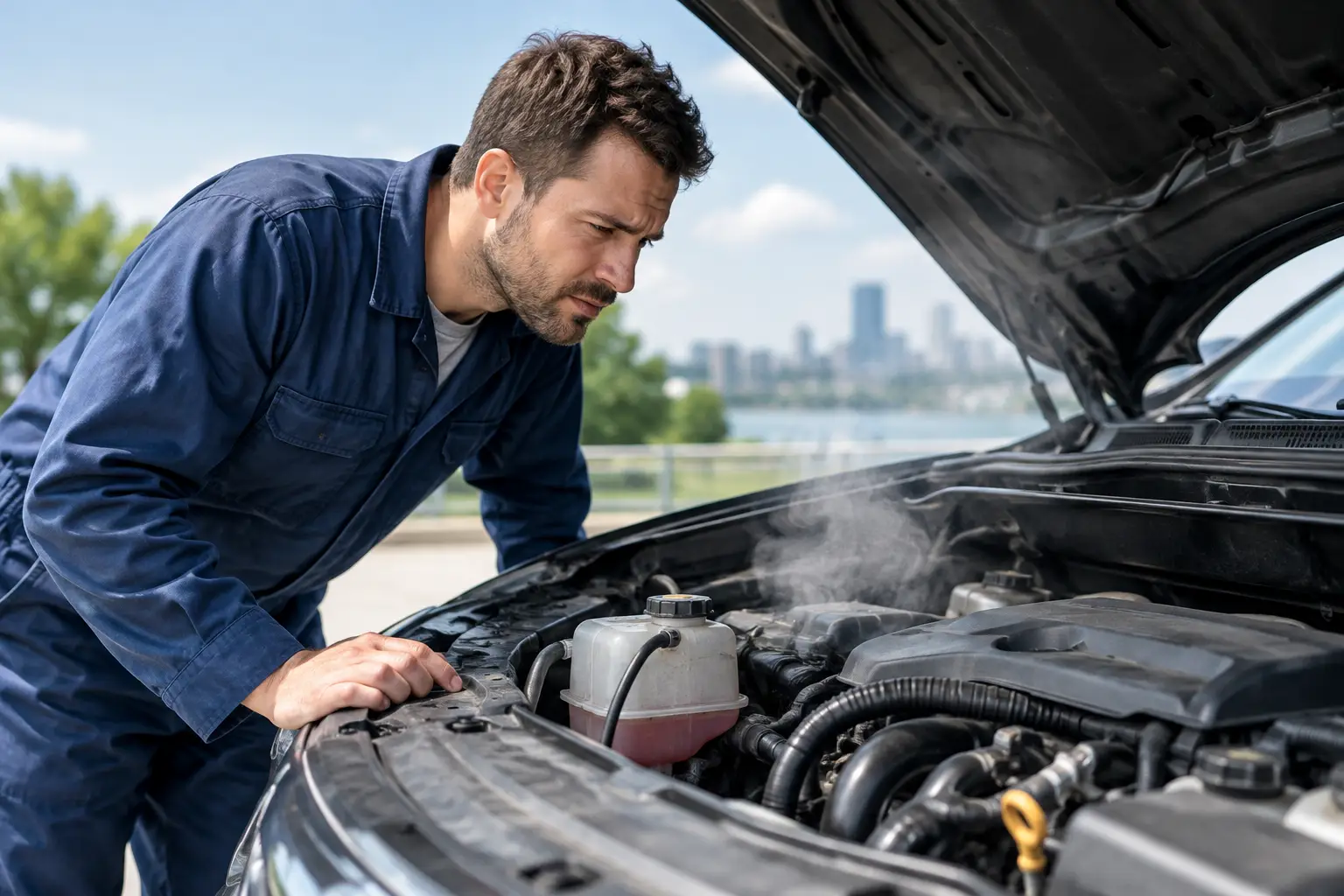
A temperature gauge climbing past its normal range can turn an ordinary Flint commute into a serious repair situation quickly. When you need engine overheating repair Flint drivers can depend on, the first priority is protecting the engine from further damage – not trying to push through a warning light or steam from under the hood.
An overheating engine may be caused by something as straightforward as a coolant leak or as involved as an internal engine problem. The only safe way to know is with a careful inspection of the cooling system, the engine, and the components that control temperature. Acting early can often mean the difference between replacing a hose and facing major engine repairs.
What to Do When Your Engine Starts Overheating
If the temperature warning light comes on, the gauge enters the red zone, or you see steam coming from the front of the vehicle, pull over as soon as you can do so safely. Turn off the air conditioner, which adds load to the engine. If you need a little time to reach a safe stopping point, turning the heater to full heat may help draw some heat away from the engine, but this is only a short-term measure.
Once stopped, turn the engine off and allow it to cool. Do not open the radiator cap or coolant reservoir cap while the engine is hot. Cooling systems are pressurized, and hot coolant can spray out and cause serious burns. Do not pour cold water over a hot engine, either. Rapid temperature changes can damage hot metal components.
It can be tempting to add coolant and continue driving, especially when you have work, school pickups, or appointments to manage. That choice carries risk. If a leak, failed fan, stuck thermostat, or water pump issue is still present, the engine can overheat again within minutes. A tow and a proper inspection are often less expensive than the engine damage that can result from continuing to drive.
Common Causes of Engine Overheating
Your vehicle’s cooling system constantly moves coolant through the engine and radiator to control heat. It depends on several parts working together. When one part fails, normal operating temperature can rise fast.
Low Coolant or a Coolant Leak
Low coolant is one of the most common reasons for overheating. Coolant can escape through a cracked hose, loose clamp, damaged radiator, leaking water pump, worn gasket, or a failed heater core. Some leaks leave a visible puddle under the vehicle, often green, orange, pink, yellow, or blue depending on the coolant type. Others only leak when the system becomes hot and pressurized.
Adding more coolant may restore the level temporarily, but it does not fix the leak. A technician can pressure-test the system to locate where coolant is escaping and determine whether the repair is minor or requires replacing a larger component.
Thermostat Problems
The thermostat regulates coolant flow between the engine and radiator. When it sticks closed, hot coolant cannot circulate properly, and the engine temperature can rise quickly. A thermostat can also fail intermittently, making the problem hard to predict. You might notice the gauge suddenly spike after the vehicle appears to be running normally.
Because thermostat symptoms can overlap with other cooling-system issues, replacement should follow a diagnosis rather than a guess. This helps prevent spending money on a part that was not the real cause.
Radiator, Fan, or Airflow Issues
The radiator releases heat from the coolant. If its passages are blocked, its fins are damaged, or it is leaking, it cannot do that job efficiently. Cooling fans are just as critical when the vehicle is idling, moving slowly in traffic, or using the air conditioner. A failed fan motor, relay, fuse, sensor, or wiring connection can allow temperatures to climb when there is not enough natural airflow through the radiator.
This is why an engine that overheats only in traffic can point to a different problem than one that overheats at highway speed. The pattern matters, and sharing it with your repair shop can help speed up diagnosis.
Water Pump or Drive Belt Failure
The water pump circulates coolant through the engine and radiator. If the pump wears out, leaks, or loses the ability to move coolant effectively, heat builds up inside the engine. A damaged or slipping drive belt may also prevent the pump from operating correctly on vehicles that use a belt-driven pump.
A water pump concern may come with coolant loss, a whining or grinding noise, or visible seepage near the pump. In some cases, there are few obvious symptoms before overheating begins. Inspection is the best way to identify the cause before it becomes a larger repair.
Internal Engine Problems
Repeated or severe overheating can damage a head gasket, warp a cylinder head, or create cracks in engine components. In other cases, an internal problem is what caused the overheating in the first place. White exhaust smoke, milky-looking engine oil, unexplained coolant loss, rough running, or bubbles in the coolant reservoir can all be warning signs.
These repairs are more involved, but accurate testing matters. A shop may use pressure testing, combustion-gas testing, scan-tool data, and visual inspection to separate an external cooling-system failure from an internal engine issue. Clear findings allow you to make an informed repair decision instead of approving work based on uncertainty.
What a Professional Cooling-System Inspection Should Include
Reliable engine overheating repair is about finding the source, not simply clearing a warning light. At DNC Auto Repair, technicians can inspect coolant level and condition, look for external leaks, test system pressure, verify fan operation, evaluate the thermostat and water pump, and check for signs of internal engine damage when needed.
Modern diagnostics can also reveal whether the engine temperature sensor is reporting accurately and whether the vehicle’s computer is commanding the cooling fans at the correct time. This is especially helpful on newer vehicles, where electrical controls play a larger role in cooling-system operation.
After the inspection, you should receive a straightforward explanation of the issue, the recommended repair, and the expected cost before work begins. Some concerns require immediate attention for safety and engine protection. Others, such as early seepage from a hose or radiator connection, may allow time to plan the repair. The right decision depends on the condition of the vehicle, the severity of the leak, and how quickly temperatures are rising.
Can You Prevent Another Overheating Problem?
Not every failure can be predicted, but regular maintenance gives you a better chance of catching cooling-system trouble early. Follow your vehicle manufacturer’s recommendations for coolant service, and use the correct coolant type. Mixing incompatible coolants can reduce protection and create deposits that affect system performance.
Pay attention to small changes. A sweet smell after driving, a low coolant warning, an unexplained puddle, a heater that blows cold at idle, or a temperature gauge that runs higher than usual are all reasons to schedule an inspection. Waiting until steam appears can turn a manageable repair into a costly one.
Flint weather also makes cooling-system health worth watching year-round. Summer heat increases the strain on the engine, while winter temperatures make proper coolant concentration essential to prevent freezing and corrosion. A well-maintained system protects the engine in both conditions.
If your vehicle has overheated once, treat it as a reason to have it checked before your next long trip or busy week. A clear diagnosis and timely repair can restore the dependable performance you need for the miles ahead.
Leave a Reply