



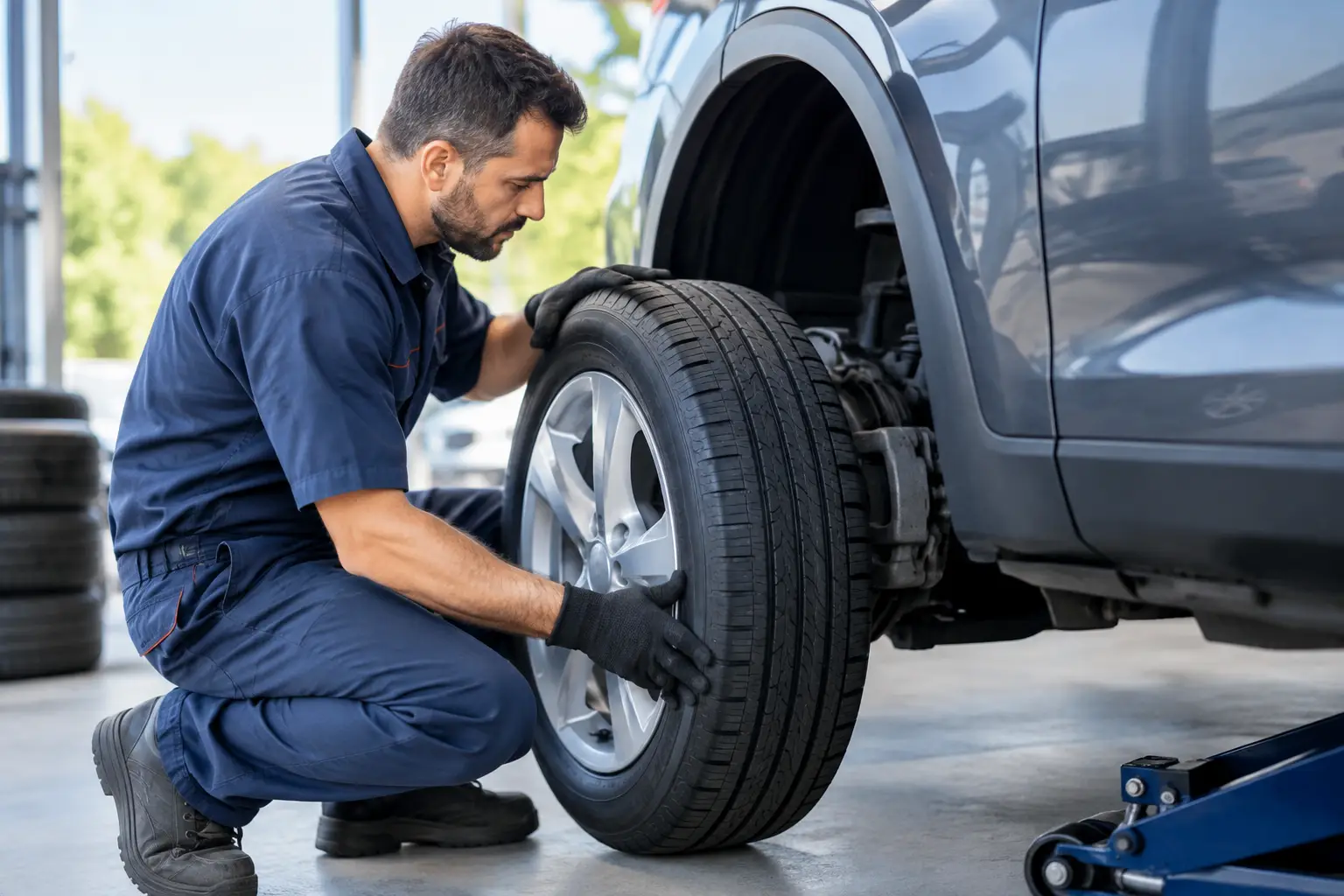
A tire can look fine in the driveway and still be a problem on a wet Flint road. Worn tread, uneven wear, low pressure, and hidden internal damage all affect how quickly a vehicle stops and how confidently it handles. Tire replacement Flint drivers arrange at the right time is not just routine maintenance. It is a practical safety decision for commutes, school drop-offs, highway travel, and every trip in between.
Tire Replacement Flint Drivers Should Not Put Off
Tires are the only part of your vehicle that contact the road. When their grip is reduced, the braking system, steering, and suspension have less to work with. That matters during heavy rain, sudden stops, winter slush, and the potholes that can appear after a Michigan freeze-thaw cycle.
Tread depth is one of the clearest signs that replacement is approaching. New tires typically begin with much deeper tread than is required by law, and replacement should be planned before tread becomes dangerously shallow. The penny test can provide a quick check: place a penny upside down in a main tread groove. If the top of Lincoln’s head is visible, the tire has very little remaining tread and should be inspected promptly. Wear bars built into the tire grooves are another warning. When the tread is level with those bars, the tire is at its limit.
Age also matters. Rubber can dry out and crack even on vehicles that do not accumulate many miles. Small cracks in the sidewall, repeated air loss, bulges, or a vibration that was not there before deserve professional attention. A bulge can indicate internal damage, often caused by an impact with a pothole or curb, and it is not something to ignore until the next oil change.
Uneven wear is especially useful information. If one edge of a tire is wearing faster than the rest, the vehicle may need an alignment or have a worn suspension component. Replacing the tire without addressing the cause can shorten the life of the new one. A proper inspection helps prevent spending money twice for the same problem.
Choosing Tires That Fit How You Drive
The best tire is not always the most expensive tire on the shelf. It is the one that fits your vehicle, your driving habits, and your budget without sacrificing the performance you need. The correct size, load rating, and speed rating are listed in the owner’s manual and usually on the driver’s door placard. Those specifications are a starting point, not a suggestion to overlook.
For many Flint-area drivers, quality all-season tires make sense. They provide dependable everyday traction and a practical balance of ride comfort, tread life, and cost. Drivers who regularly travel through heavy snow, work early shifts before roads are fully cleared, or want stronger cold-weather traction may benefit from dedicated winter tires. Winter tires are made with rubber compounds designed to stay more flexible in low temperatures, but they should be changed out when warm weather returns to avoid faster wear.
Touring tires can be a good choice for commuters and family vehicles because they often prioritize a quieter ride and longer tread life. Performance tires may offer sharper handling, but they can wear faster and may not provide the same value for a vehicle that mostly sees city streets and highway miles. Truck and SUV owners may need tires with higher load capacity, while drivers who tow should pay close attention to tire ratings and inflation requirements.
It also helps to think beyond the purchase price. A lower-cost tire may be the right choice for an older vehicle with limited remaining service life. On the other hand, a tire with a stronger treadwear warranty or better wet-weather performance may be worth the difference for a family vehicle driven year-round. Clear options and straightforward pricing make that decision easier.
Why Installation Matters as Much as the Tire
Buying the right tire is only part of the job. Proper installation supports tire life, ride quality, and vehicle safety. The old tire must be removed carefully, the wheel inspected, and the replacement mounted and balanced correctly. A wheel that is out of balance can create steering-wheel vibration and contribute to uneven tire wear over time.
Tire pressure monitoring system sensors also need attention during service. If a sensor is damaged, has a weak battery, or is not properly reset after installation, the warning light may remain on or fail to alert you when pressure is low. Low pressure generates excess heat inside a tire, reduces fuel economy, and can make handling less predictable.
An alignment check is often a smart addition when new tires are installed, especially after a pothole impact or when the old tires show irregular wear. Alignment is not the same as balancing. Balancing addresses how the wheel and tire rotate, while alignment adjusts the angles at which the wheels meet the road. Both can affect how long a new set lasts.
At DNC Auto Repair, technicians can inspect tire condition alongside brakes, suspension, steering, and alignment concerns. This broader approach is helpful because tires often reveal problems elsewhere in the vehicle before a driver notices changes in handling.
Should You Replace One Tire, Two Tires, or All Four?
The answer depends on the condition of the remaining tires and the type of vehicle you drive. If one tire is damaged and the other three have plenty of matching tread remaining, replacing a single tire may be reasonable. The new tire should match the others as closely as possible in size, type, and tread pattern.
When two tires are replaced, they are commonly installed on the rear axle, even on front-wheel-drive vehicles. This can help reduce the risk of the rear of the vehicle losing traction on wet roads. Tire professionals can confirm the appropriate setup for your vehicle and tire combination.
All-wheel-drive vehicles require extra care. Significant differences in tire circumference can place stress on the drivetrain, so some manufacturers recommend replacing all four tires or keeping tread-depth differences within a narrow range. The owner’s manual and a qualified technician should guide that decision. Replacing only the visibly worn tire may seem less expensive now, but it can create a more costly issue later if it is not compatible with the drivetrain’s requirements.
Getting More Miles From New Tires
Once new tires are installed, regular attention protects the investment. Check pressure at least once a month and before long trips, using the pressure listed on the vehicle placard rather than the maximum pressure stamped on the tire sidewall. Pressure should be checked when tires are cold for the most accurate reading.
Rotating tires on schedule helps distribute wear more evenly. The right interval varies by vehicle and tire type, but many drivers plan rotations around routine maintenance visits. It is also wise to have an alignment checked if the vehicle pulls to one side, the steering wheel is off-center, or you strike a hard pothole. Catching a problem early can preserve tread that would otherwise be lost.
Avoiding sudden acceleration, hard braking, and fast cornering will help, but normal driving conditions still take a toll. No tire lasts forever. Regular inspections make replacement a planned service rather than an urgent surprise on the side of the road.
What Affects the Cost of Tire Replacement?
Tire replacement costs vary because vehicles and driving needs vary. Tire size, brand, tread design, load rating, warranty coverage, and the number of tires being replaced all influence the total. Installation services may include mounting, balancing, valve service, disposal of old tires, and sensor work. If an alignment, repair, or suspension correction is needed, that will add to the estimate.
A trustworthy shop should explain what is included before work begins and separate necessary recommendations from services that can wait. Ask about available tire options at different price points, expected tread life, warranty coverage, and whether your current wear pattern points to another repair need. For budget-conscious drivers, financing availability can also make an unexpected tire expense more manageable.
New tires should make the vehicle feel settled and predictable, not leave you wondering whether the job was done correctly. If your tread is worn, your vehicle shakes at speed, or you are seeing repeated pressure warnings, schedule an inspection before the next weather change or long drive. A little attention now can make every mile afterward feel safer.
Leave a Reply