



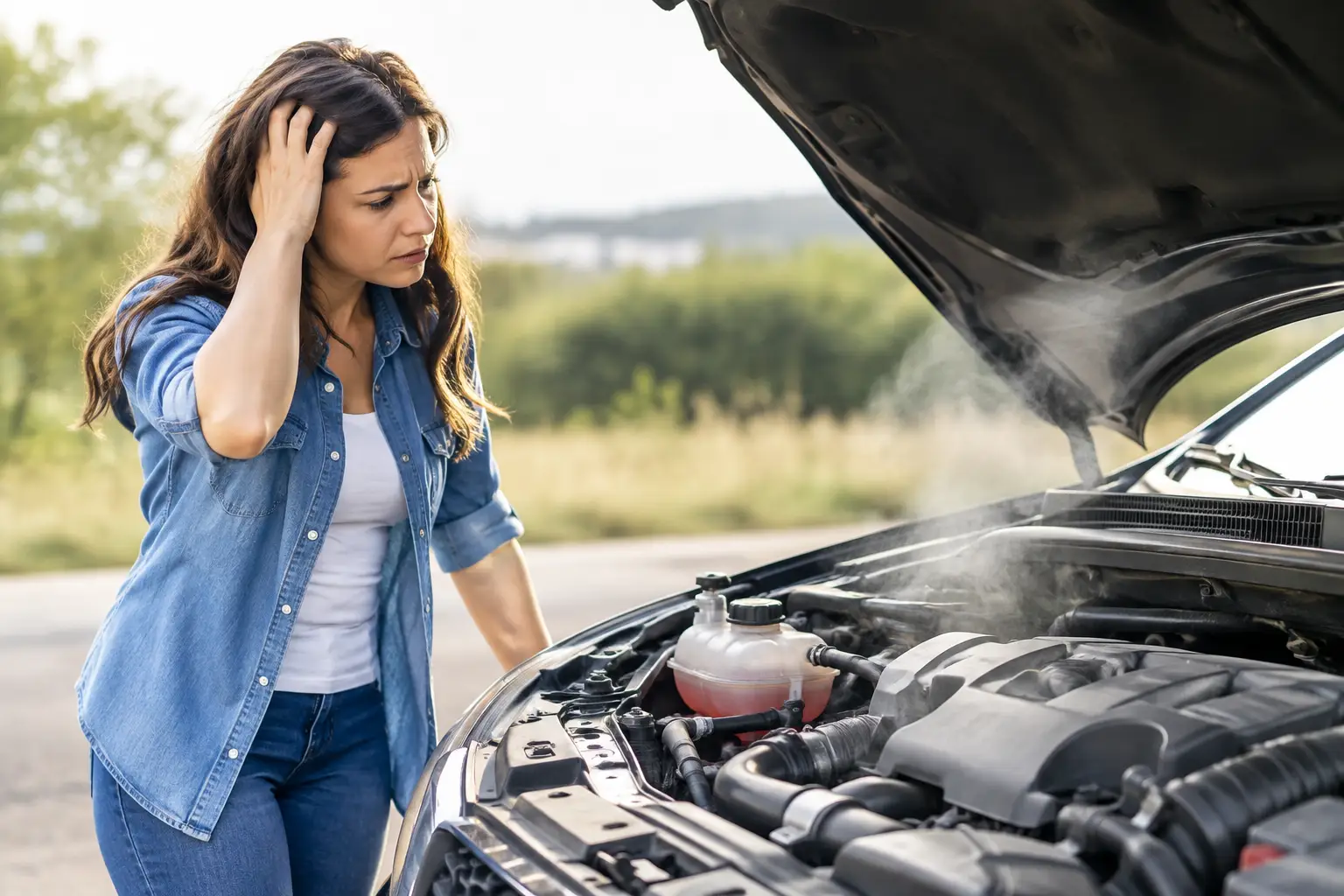
A temperature gauge moving toward hot is not a warning to deal with after work. It is a sign to act now. Car overheating causes range from a small coolant leak to a failed internal engine component, and continuing to drive can turn a manageable repair into serious engine damage. Knowing what to watch for helps Flint drivers protect the vehicle they depend on every day.
What to Do When Your Car Starts Overheating
If the temperature warning light comes on, the gauge reaches the red zone, or steam comes from under the hood, safely pull over as soon as possible. Turn off the air conditioning, which adds load to the engine. If you need a short period to reach a safer stopping point, turning the heater to full hot may draw some heat away from the engine, but this is only a temporary measure.
Once stopped, shut the engine off and let it cool completely. Do not remove the radiator cap or coolant reservoir cap while the engine is hot. The cooling system is pressurized, and hot coolant can spray out and cause severe burns.
A vehicle that has overheated once needs attention even if the gauge returns to normal later. Coolant may be low, a part may be failing intermittently, or pressure may be escaping from the system. A proper inspection can identify the reason before the next drive leaves you stranded.
Common Car Overheating Causes
Your engine produces a great deal of heat every time it runs. The cooling system manages that heat by circulating coolant through the engine and radiator, then releasing heat through the radiator as air passes across it. When any part of that process breaks down, engine temperature rises quickly.
Low Coolant or a Coolant Leak
Low coolant is one of the most common reasons for overheating. Coolant absorbs heat from the engine and carries it to the radiator. When the level is too low, there is not enough fluid to move heat effectively.
Leaks can come from a cracked hose, loose clamp, damaged radiator, failing water pump, worn gasket, or a leaking heater core. You may notice a sweet smell, green, orange, pink, or blue fluid under the vehicle, or a coolant reservoir that keeps dropping below its proper level. Keep in mind that not every leak leaves a visible puddle. Coolant can seep onto hot engine parts and evaporate, or leak internally.
Adding coolant may get you home in some situations, but it does not repair the leak. Using the wrong coolant type or mixing products can also create problems. The system should be inspected, pressure-tested when appropriate, and refilled with the correct coolant mixture.
A Stuck Thermostat
The thermostat controls when coolant flows from the engine to the radiator. When the engine is cold, it stays closed so the engine can warm up efficiently. Once normal operating temperature is reached, it opens to allow coolant circulation.
If a thermostat sticks closed, hot coolant cannot reach the radiator. The temperature gauge may climb rapidly, sometimes within a few minutes of driving. A thermostat is a relatively small part, but ignoring its failure can put the entire engine at risk.
A Failing Water Pump
The water pump is responsible for moving coolant through the engine, hoses, radiator, and heater core. If the pump leaks, develops a worn bearing, loses its impeller, or is not being driven properly by its belt, coolant circulation can slow down or stop.
Signs can include overheating, coolant leaking near the front of the engine, a whining or grinding noise, or steam under the hood. Water pump replacement can vary in labor depending on the vehicle, because access may require removing other components. A clear diagnosis matters before approving repairs.
Radiator Problems and Restricted Coolant Flow
A radiator needs clean internal passages and open external fins to transfer heat effectively. Rust, scale, contaminated coolant, or neglected maintenance can restrict the flow of coolant inside the radiator. On the outside, dirt, leaves, road debris, or bent fins can reduce airflow.
A damaged radiator may also leak or fail to hold pressure. Cooling-system pressure raises the boiling point of coolant, so a weak radiator cap or damaged radiator can contribute to overheating even when the coolant level looks acceptable. These problems are especially worth addressing before warmer weather, stop-and-go traffic, or longer highway trips.
Cooling Fan Failure
Most modern vehicles use electric radiator fans. These fans are especially important at idle and in slow traffic, when the vehicle is not moving fast enough to push much air through the radiator. Older vehicles may use engine-driven fans with a fan clutch.
A failed fan motor, relay, fuse, temperature sensor, wiring issue, or fan clutch can allow the engine to overheat while sitting in traffic but run closer to normal at highway speed. That pattern is a useful clue, but it still requires testing. Replacing parts based on a guess can waste money and leave the original problem unresolved.
A Bad Head Gasket or Internal Engine Problem
Some overheating concerns begin in the cooling system. Others start inside the engine. A failed head gasket can allow combustion gases into the cooling system, force coolant out, or let coolant enter the engine cylinders or oil passages.
Possible signs include repeated overheating, white exhaust smoke after the engine is warmed up, unexplained coolant loss, bubbles in the coolant reservoir, rough running, or milky-looking engine oil. These symptoms do not automatically prove a head gasket failure, but they call for professional testing. Driving with an internal engine issue can lead to warped cylinder heads, damaged bearings, or complete engine failure.
Why Overheating Can Cause Expensive Damage
Engine components are built to operate within a specific temperature range. When temperatures climb too high, metal expands beyond its intended tolerance. Cylinder heads can warp, gaskets can fail, and oil can lose some of its ability to protect moving parts.
The cost difference between replacing a hose and repairing an overheated engine can be significant. That is why pulling over early is usually the right decision, even when it disrupts your plans. It is also why a temperature gauge should never be treated like a suggestion.
How to Reduce the Risk of Overheating
Routine maintenance gives the cooling system its best chance to work properly. Check coolant level only when the engine is cool, and pay attention to any warning light, sweet odor, new puddle, or change in the temperature gauge. If your heater suddenly blows cold while the engine is hot, coolant may be low or circulation may be poor.
Follow the manufacturer’s maintenance schedule for coolant service, belts, and related components. The right interval depends on your vehicle, coolant type, driving habits, and the condition of the system. Drivers in Michigan should also be mindful of coolant condition before winter. Proper antifreeze protection matters in freezing temperatures, but the same coolant is also essential for controlling engine heat year-round.
Avoid treating stop-leak products as a permanent repair. They may be tempting when a leak appears, but they can clog small cooling passages, the heater core, or other components. In many cases, diagnosing and repairing the actual source of the leak is the safer and more cost-effective choice.
When to Schedule a Cooling System Inspection
Schedule an inspection if your vehicle has overheated, loses coolant, has a temperature gauge that fluctuates, smells like coolant, or shows a warning light. It is also smart to have the system checked before a long trip if you have noticed even minor cooling issues.
At DNC Auto Repair, certified technicians can inspect the cooling system, test for leaks and pressure loss, evaluate fan operation, and explain the repair options clearly. The goal is not simply to make the warning light go away. It is to find the cause, protect your engine, and help you get back to dependable driving.
If your temperature gauge starts climbing, trust what your vehicle is telling you. Pull over safely, let it cool, and arrange an inspection before a small cooling-system problem has the chance to become a much bigger repair.
Leave a Reply