



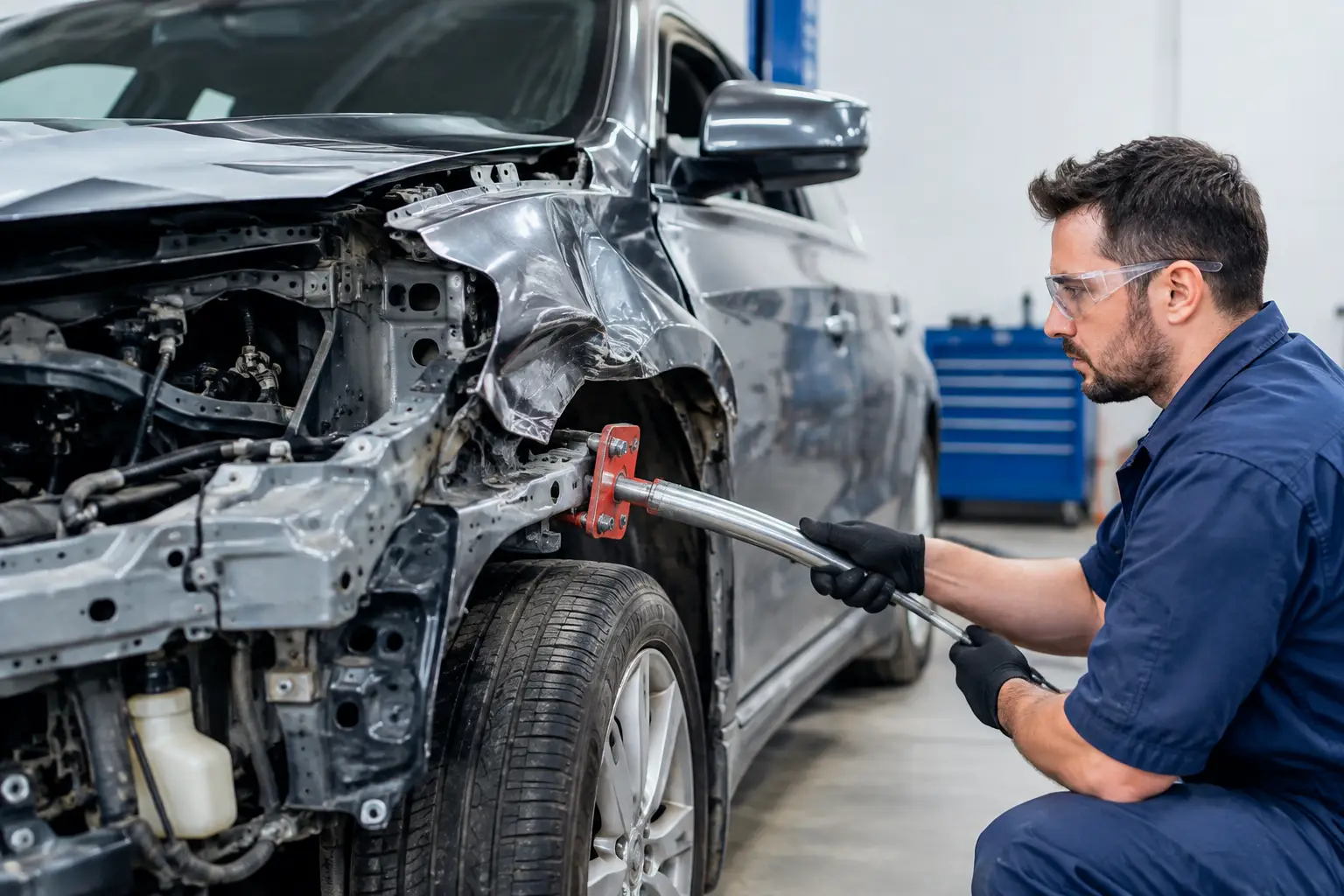
A search for frame straightening after accident Flint usually comes after a stressful moment: the vehicle may still start and drive, but something does not feel right. Maybe the steering wheel sits crooked, a door will not close smoothly, or the car pulls toward one side. Those signs deserve a professional collision inspection, even when the outside damage looks minor.
A vehicle’s frame or unibody structure is designed to support the body, suspension, steering, and safety systems. When that structure is out of position, the issue can affect more than appearance. Proper frame straightening helps restore the vehicle’s dimensions so it can be aligned, repaired, and driven with greater confidence.
Why Frame Damage Is Not Always Easy to See
Many newer vehicles use unibody construction. Instead of having a separate, full-length frame underneath, the body and structural components work together as one system. These vehicles are engineered with crumple zones that absorb impact energy during a collision. That is good for occupant protection, but it also means damage may be hidden behind bumpers, fenders, trunk panels, or underbody covers.
A low-speed parking lot impact can bend a bracket or cosmetic panel. A harder front, rear, or side impact can shift structural mounting points by a small amount that is difficult to spot without measuring equipment. Small changes can still affect wheel alignment, tire wear, panel fit, and the way the vehicle handles.
This is why a visual walk-around is only the starting point. Certified technicians inspect the vehicle’s structure, suspension, steering components, and body gaps before deciding whether frame work is needed. The goal is not to sell an unnecessary repair. It is to identify damage that could compromise safe, reliable driving.
Signs You May Need Frame Straightening After an Accident in Flint
Some symptoms show up immediately. Others become noticeable after a few days of commuting around Flint and Genesee County. If your vehicle has been in a collision, pay attention to changes such as uneven gaps between body panels, doors or a trunk that stick, a hood that will not latch correctly, or a bumper that appears uneven.
Driving symptoms matter just as much. A vehicle that pulls, wanders, vibrates, or has a steering wheel that is off-center may have alignment, suspension, tire, or structural damage. Uneven tire wear after an accident is another reason to schedule an inspection. Alignment adjustments can correct many ordinary issues, but alignment alone cannot fix damaged structural points.
You may also notice new wind noise, water leaks, unusual rattles, or a vehicle that does not track straight on a level road. None of these signs proves the frame is bent, but each is worth checking. Continuing to drive a damaged vehicle can wear out tires faster and may make it harder to control in an emergency.
How Professional Frame Straightening Works
Frame straightening is a measurement-driven repair, not a matter of pulling metal until panels look better. The process starts with a thorough evaluation. Technicians document visible damage, inspect mechanical components, and compare structural measurements to manufacturer specifications.
When structural correction is necessary, the vehicle is secured on specialized equipment. Controlled hydraulic pulls are used to move affected areas back toward their correct position. Technicians remeasure throughout the process rather than relying on guesswork. Depending on the collision, this work may involve the front rails, rear structure, rocker panels, suspension mounting locations, or other reinforced sections of the vehicle.
After structural measurements are corrected, the vehicle may need additional repairs. That can include replacement of damaged body panels, suspension parts, steering components, lights, sensors, or bumper reinforcements. Wheel alignment is typically performed after the structure and related components are repaired. Paint and refinishing work come later, once the body fits correctly.
Modern vehicles can also require calibration of safety and driver-assistance systems after collision repair. Cameras, radar sensors, parking sensors, and other equipment depend on correct vehicle geometry and proper mounting positions. A repair that looks complete on the outside may still need these final checks before the vehicle is ready for the road.
Can a Bent Frame Be Repaired?
In many cases, yes. Whether a vehicle can be safely repaired depends on the location and extent of the damage, the vehicle’s age and value, parts availability, and manufacturer repair procedures. A properly equipped shop can correct many structural issues, especially when the damage is identified early and repaired according to measured specifications.
There are situations where repair may not be the best financial choice. Severe damage, extensive corrosion, major powertrain damage, or repair costs that approach the vehicle’s value can change the decision. If an insurance company is involved, it may determine that the vehicle is a total loss. That does not mean every bent frame leads to a total loss, but it is one reason a complete estimate matters.
A trustworthy repair recommendation should explain what was found, what work is required, and why. Ask for a clear estimate and an explanation of any additional repairs that may be uncovered after disassembly. Collision damage is sometimes hidden, so a good shop will communicate if the repair plan changes rather than surprising you at pickup.
Why Alignment Alone May Not Solve the Problem
It is common to assume that a pull or crooked steering wheel after an accident only calls for wheel alignment. Alignment is essential, but it adjusts the angles of the wheels and suspension within a specified range. If a suspension mounting point or structural section has shifted, alignment adjustments may be limited or may not hold as expected.
For example, a technician may find that one wheel cannot be brought into specification because a control arm, strut, knuckle, subframe, or structural mounting area was damaged in the collision. Replacing worn parts without correcting the underlying structure can lead to recurring alignment problems and premature tire wear.
The right sequence matters: inspect the collision damage, repair structural and mechanical concerns, then perform the final alignment and road test. This approach protects your investment in tires, suspension work, and body repairs.
What to Do After a Collision
If the vehicle is unsafe to drive, arrange for towing rather than taking chances on the road. If it seems drivable, avoid assuming that a normal-looking bumper means there is no deeper damage. Take photos, keep accident-related paperwork, and schedule an inspection promptly.
When you bring the vehicle in, share details about the impact. Let the technician know where the vehicle was hit, whether airbags deployed, and what changes you have noticed while driving. Those details help guide the inspection and can reveal problems that are not obvious during a first look.
At DNC Auto Repair, the collision repair process is built around clear communication. Our technicians can inspect structural, mechanical, alignment, and body-related concerns in one place, then explain the recommended repairs in plain language. You should understand the condition of your vehicle before approving the work.
Choosing a Flint Shop for Structural Repair
Frame and unibody repairs require more than basic bodywork. Look for a shop that can perform accurate structural measurements, collision repair, alignment, mechanical repairs, and final safety checks. It is also helpful to choose a local team that will explain the estimate, communicate about timelines, and stand behind completed work.
Turnaround time depends on the damage and parts availability. A simple repair may move quickly, while a larger collision repair can take longer because structural work must be done carefully and replacement parts may need to be ordered. Fast service is valuable, but correct measurements and safe repairs should come first.
If your vehicle was recently hit and it is not driving or fitting together as it should, do not wait for the problem to become more expensive. A professional inspection can give you a clear answer and a practical path forward, so you can get back to your daily routine with confidence.
Leave a Reply