



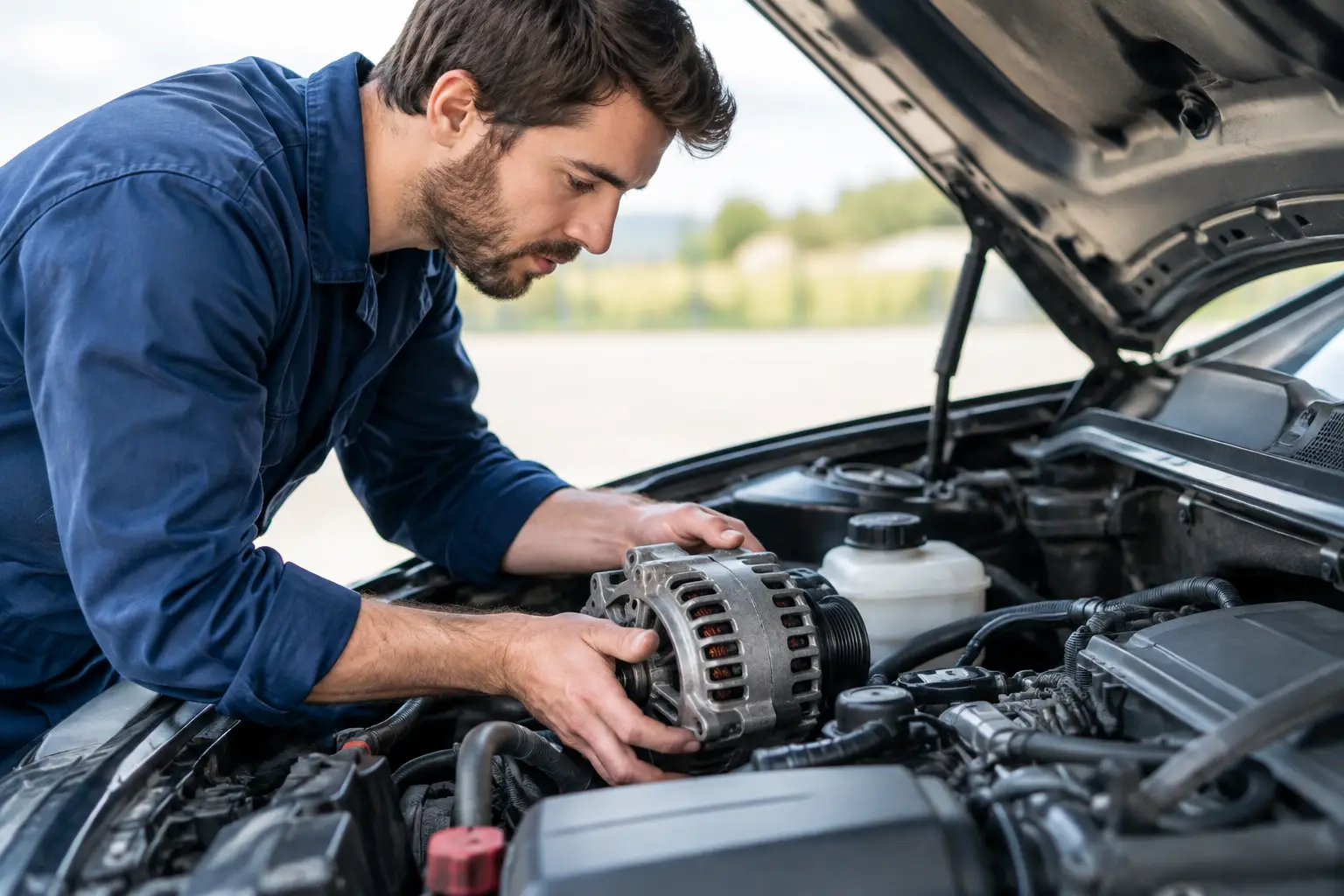
A vehicle can start normally in the morning and lose electrical power on the drive home. That is why knowing how to identify alternator failure matters. The alternator keeps your battery charged while the engine runs and powers systems such as headlights, climate control, ignition, power steering, and electronics. When it cannot keep up, the battery takes over temporarily – until it is drained.
Alternator trouble is not always a sudden failure. Many drivers first notice small changes, such as dim headlights at idle or a battery warning light that comes and goes. Acting early can help you avoid a roadside breakdown, a tow, and potential damage caused by an overheated belt or electrical problem.
What an Alternator Does for Your Vehicle
The battery provides the power needed to start the engine. Once the engine is running, the alternator uses belt-driven mechanical energy to produce electricity. It recharges the battery and supplies current to the vehicle’s electrical systems.
A healthy charging system usually maintains a voltage above the battery’s resting voltage when the engine is running. If the alternator, belt, wiring, voltage regulator, or connections have a problem, the vehicle may begin operating only on stored battery power. Depending on the battery condition and electrical demand, that power may last a few minutes or much longer. There is no reliable distance you can expect to travel after the warning light appears.
Warning Signs of Alternator Failure
The clearest sign is often the battery-shaped warning light on the dashboard. Despite its appearance, this light does not always mean the battery itself is bad. It usually means the charging system is not operating as expected. A loose belt, corroded cable, failing alternator, or related wiring issue can all trigger it.
Dimming or flickering headlights are another common symptom. You may notice that lights brighten when you press the accelerator and fade at idle, especially at night. Interior lights, dashboard lighting, and the radio display can behave the same way. This can also happen with a weak battery, so it calls for testing rather than guesswork.
Slow or unreliable electrical accessories deserve attention as well. Power windows may move slowly, the blower motor may weaken, the radio may cut out, or the infotainment screen may restart. On some vehicles, you may also see warnings for traction control, anti-lock brakes, steering, or other systems because low voltage can confuse multiple electronic modules.
Listen for new sounds under the hood. A worn alternator bearing can make a whining or grinding sound. A loose or damaged serpentine belt may squeal, particularly when starting the engine or turning on high electrical loads such as the defroster. The sound alone does not prove the alternator has failed, but it should not be ignored.
A burning rubber smell can point to a slipping or overheating belt. In more serious cases, you may smell hot wiring or insulation. If you notice smoke, a strong burning smell, or rapidly worsening electrical problems, pull over safely and turn the vehicle off. Continuing to drive can create a greater safety risk.
How to Identify Alternator Failure Without Guessing
A dead battery does not automatically mean you need an alternator. Batteries wear out, terminals corrode, starters fail, and parasitic electrical drains can all cause no-start problems. A proper diagnosis looks at the full charging system before parts are replaced.
Start by observing what happens when you start the vehicle. If it cranks slowly after sitting overnight but runs normally once started, the battery may be weak or the charging system may not be recharging it fully. If the engine starts with a jump but dies shortly after the jumper cables are removed, the alternator may not be producing enough power. However, a loose connection or damaged cable can create similar symptoms.
You can inspect visible items with the engine off. Check that battery terminals are secure and free from heavy corrosion. Look at the serpentine belt for cracking, fraying, glazing, or obvious looseness. Do not put hands, tools, or clothing near a moving belt while the engine is running.
A multimeter can provide helpful information if you are comfortable using one. With the vehicle off, a fully charged conventional 12-volt battery often reads around 12.4 to 12.7 volts. With the engine running, many vehicles will show roughly 13.5 to 14.8 volts, indicating the alternator is charging. Readings below that range may point to a charging problem.
Still, voltage numbers are only part of the picture. Many newer vehicles use smart charging systems that intentionally vary alternator output based on temperature, battery condition, and electrical demand. A quick reading may look unusual even when the system is functioning properly. A technician can perform a charging-system test under load, inspect the belt drive, check voltage drop across cables, and scan for stored fault codes.
Never test an alternator by disconnecting the battery cable while the engine is running. That old advice can create voltage spikes and damage sensitive electronics, including modules that cost far more than a professional diagnostic test.
When You Should Stop Driving
If the battery warning light comes on but the vehicle is otherwise operating normally, reduce electrical demand and arrange service as soon as possible. Turn off nonessential accessories such as seat heaters, unnecessary charging devices, and the rear defroster if conditions allow. Do not assume the vehicle will make it home simply because it is still running.
Stop driving and seek help sooner if the lights become very dim, the engine begins running poorly, the steering changes, multiple warning lights appear, or you smell something burning. If the engine stalls, do not repeatedly attempt to restart it. Each restart uses significant battery power, and the vehicle may lose power again in an unsafe location.
There is also a practical trade-off during Michigan winter weather. Reducing electrical use may help preserve power, but driving without needed headlights, defrosting, or heat can make the vehicle unsafe. In that situation, getting to a safe location and arranging a tow is often the better choice.
Why Professional Testing Saves Money
Alternators do fail with age, heat, moisture, and normal wear, but replacing one based on a single symptom can waste money. The real issue may be a worn belt tensioner, battery with an internal defect, corroded ground connection, blown fuse, damaged wiring, or faulty control signal.
A complete inspection helps separate these problems. Technicians can test battery capacity, alternator output, charging voltage under electrical load, belt condition, cable resistance, and related components. They can also check whether a weak battery has been damaged by repeated low-charge conditions. This matters because installing a new alternator without addressing a failing battery or poor cable connection may leave you with the same starting problem.
For Flint-area drivers, DNC Auto Repair can diagnose charging and electrical concerns with clear explanations before repair work begins. The goal is not simply to replace a part. It is to find the cause of the problem and help return your vehicle to dependable daily use.
Protecting Your Charging System
Routine maintenance gives you the best chance of catching trouble early. Have the battery and charging system checked when you notice slower starts, weak lighting, or an intermittent warning light. During regular service, ask for the serpentine belt and battery connections to be inspected as well.
Keep in mind that alternator failure is often gradual, but the final loss of power can happen quickly. Paying attention to the first warning light, unusual electrical behavior, or belt noise gives you more options than waiting for the vehicle to stall. A timely diagnosis can turn a stressful breakdown into a straightforward repair appointment.
Leave a Reply