



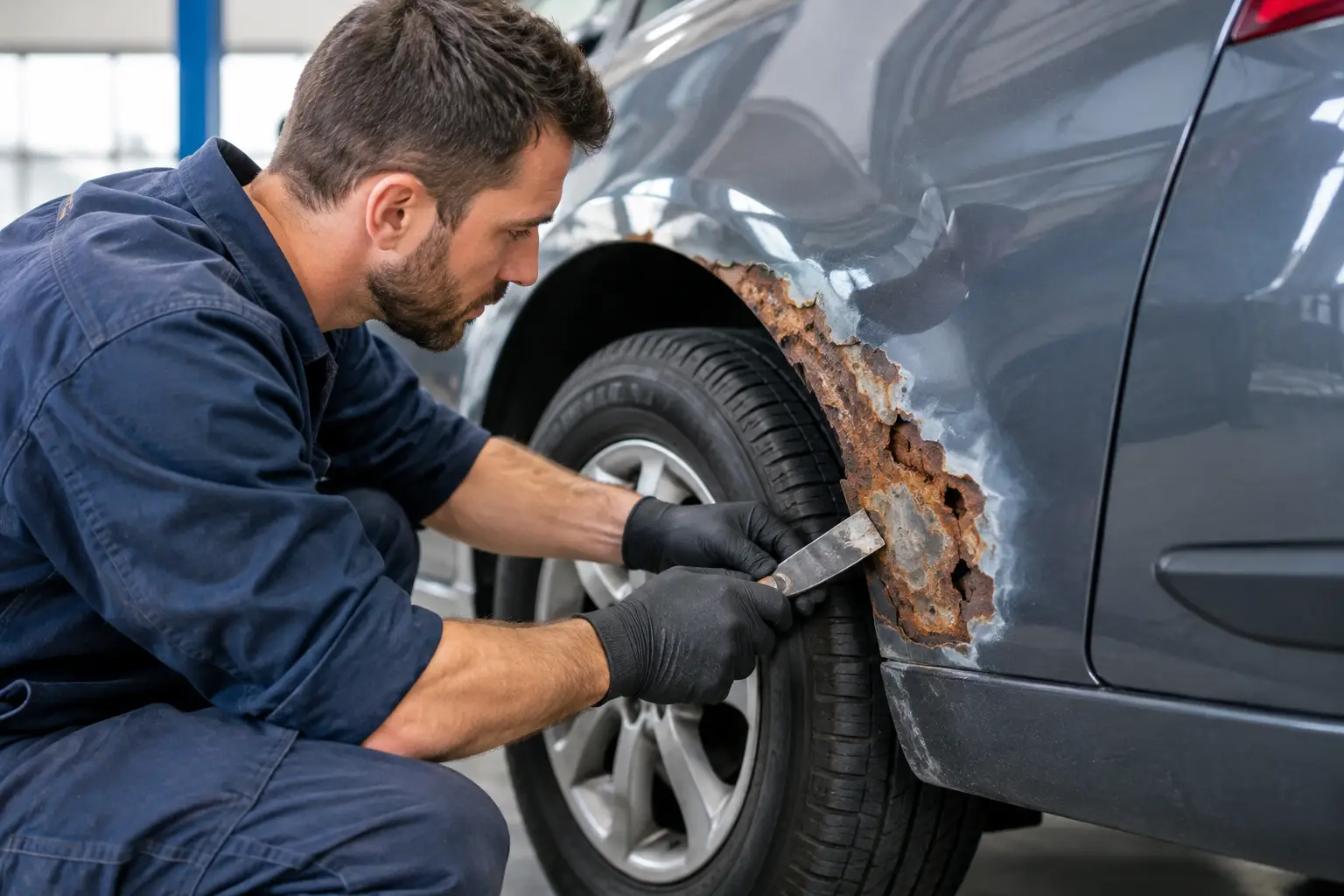
A few bubbles beneath the paint can look like a cosmetic problem. In Flint, they can be the first visible sign of corrosion spreading behind a rocker panel, around a wheel opening, or underneath the vehicle where road salt and moisture collect. Rust repair for cars in Flint is about more than making a vehicle look better. Done at the right time, it can help protect structural areas, prevent a small repair from becoming a larger one, and keep a dependable vehicle on the road.
Michigan winters are hard on cars and trucks. Salted roads, slush, temperature swings, and wet spring conditions give corrosion plenty of opportunity to start. The good news is that rust does not always mean a vehicle is beyond repair. The right next step depends on where the rust is located, how deep it has gone, and whether it affects safety-related parts.
Why Rust Spreads So Quickly Around Flint
Rust begins when bare metal is exposed to oxygen and moisture. A paint chip from road debris, a scrape along a lower door, or a damaged seam can create an opening. Once moisture gets underneath paint or protective coating, corrosion can continue out of sight.
Road salt speeds up that process. It gets into seams, behind plastic trim, inside wheel wells, and along the underside of the car. Even a vehicle that looks clean from the outside may have salt buildup in areas that are difficult to see without a proper inspection.
Age matters, but it is not the only factor. A newer vehicle driven daily through winter can develop underbody corrosion, while an older vehicle that is washed regularly and stored carefully may have limited rust. Vehicle design, prior collision damage, drainage issues, and previous repair quality can all affect how corrosion develops.
Surface Rust vs. Rust That Needs Repair Now
Not all rust calls for the same repair. Surface rust is often limited to the top layer of metal. You may see it on a chipped hood edge, a small area near a door seam, or exposed hardware underneath the vehicle. If the metal is still solid, the repair may involve removing the corrosion, treating the area, priming it, and refinishing it to restore protection.
Rust that has begun to bubble the paint deserves closer attention. Bubbling usually means corrosion has formed beneath the paint layer. Sanding only the visible spot may make the area look better temporarily, but it may not stop rust that remains behind the panel.
Perforated rust is more serious. This is when corrosion has eaten through the metal and created holes, weak edges, or flaking material. Rocker panels, quarter panels, fenders, floor pans, and wheel arches are common trouble spots. Depending on the panel and the extent of damage, a lasting repair may require cutting out weakened metal and welding in a properly fitted replacement section.
Structural corrosion should never be treated as a cosmetic issue. Rust on a frame, subframe, suspension mounting point, brake line, fuel line, or other safety-related component needs a professional evaluation. A vehicle can drive normally and still have corrosion that affects its ability to protect occupants or handle safely. That is why an inspection matters before deciding whether repair is practical.
What Quality Rust Repair for Cars in Flint Includes
A quality repair starts with finding the full extent of the damage, not just the portion visible from outside. A technician may inspect the back side of a panel, check nearby seams and drain paths, and examine the underbody for related corrosion. This step helps prevent surprises after paintwork has already begun.
For a repairable rusted panel, the damaged material must be removed completely. If rust has penetrated the metal, sound metal is exposed around the affected section before a patch or replacement panel is fitted. Proper welding, shaping, sealing, and corrosion protection are what separate a durable repair from a quick cover-up.
After the metal work is complete, the repaired area needs primer, seam sealer where appropriate, paint, and a protective coating on the hidden side. Color matching is part of the process for visible body panels, but protection beneath and behind the repair is equally important. Without it, moisture can begin working on the panel again.
The right repair can look different from vehicle to vehicle. A small fender rust spot may be a straightforward body and paint repair. Extensive rust around a unibody structure may call for a more careful discussion about cost, safety, and the remaining value of the vehicle. Honest recommendations should account for the vehicle’s condition as a whole, not simply whether a damaged area can physically be repaired.
Why Covering Rust Is Not a Real Fix
Paint, body filler, or an undercoating applied over active rust may improve appearance for a short period, but corrosion continues underneath if it has not been removed and treated correctly. That can lead to paint lifting, cracking, or bubbling again, sometimes within a season or two.
There are situations where a temporary cosmetic approach makes sense, such as a short-term vehicle or a customer preparing for a near-term sale. But that decision should be clear from the start. For a vehicle you plan to keep, repairing the metal and protecting the repaired area is generally the better value.
When to Schedule an Inspection
Early attention usually creates more repair options. Schedule an inspection if you notice paint bubbles, orange staining near seams, soft or crumbling metal, loose trim around a rusted area, or rust spreading along rocker panels and wheel wells. A scraping sound, visible corrosion under the vehicle, or a recently failed inspection can also point to a problem that needs a closer look.
It is especially wise to have the vehicle checked after a collision or curb impact. Damage to paint, undercoating, or a wheel-well liner can expose metal and trap moisture. A small impact repair handled promptly can help prevent corrosion from taking hold later.
At DNC Auto Repair, body, paint, mechanical, and inspection work can be considered together. That matters when rust may involve more than a visible panel. A customer should not have to guess whether corrosion near a wheel opening is limited to the body or whether it has affected brakes, suspension components, or mounting areas nearby.
Cost Depends on What Is Behind the Paint
Rust repair pricing varies because the visible spot does not always tell the whole story. Surface corrosion on a small, accessible area is generally less involved than rust that has reached the inside of a panel or spread across several seams. Labor also increases when trim, glass, suspension parts, or interior materials must be removed to access the affected metal correctly.
A clear estimate should explain what the shop can see at the time of inspection and identify the possibility of hidden corrosion. Once old material is removed, additional damage can sometimes appear. That is not a reason to avoid the repair. It is a reason to work with a shop that communicates clearly before additional work moves forward.
For some older vehicles, a full restoration-level repair may not make financial sense. For others, especially a reliable truck, family vehicle, or low-mileage car with years of useful life left, repairing rust early can be a practical investment. The best choice balances safety, repair cost, vehicle value, and how long you expect to keep it.
Protect a Repair Through Every Season
After rust repair, regular washing is one of the simplest ways to reduce future corrosion. During winter, wash the vehicle often enough to remove salt from wheel wells, rocker panels, and the undercarriage. Pay extra attention after slushy drives and before storing a vehicle for an extended period.
Keep drain holes and sunroof drains clear, and address fresh paint chips before water reaches bare metal. If a splash shield, wheel-well liner, or underbody panel is loose or damaged, have it repaired so it does not trap debris against the vehicle. Seasonal inspections are useful for catching problems in the places most drivers do not see.
Rust does not improve with time, but it can often be managed before it becomes a major safety or budget concern. A straightforward inspection gives you a clear picture of what is happening underneath the paint and what a sensible repair plan looks like for your vehicle.
Leave a Reply