



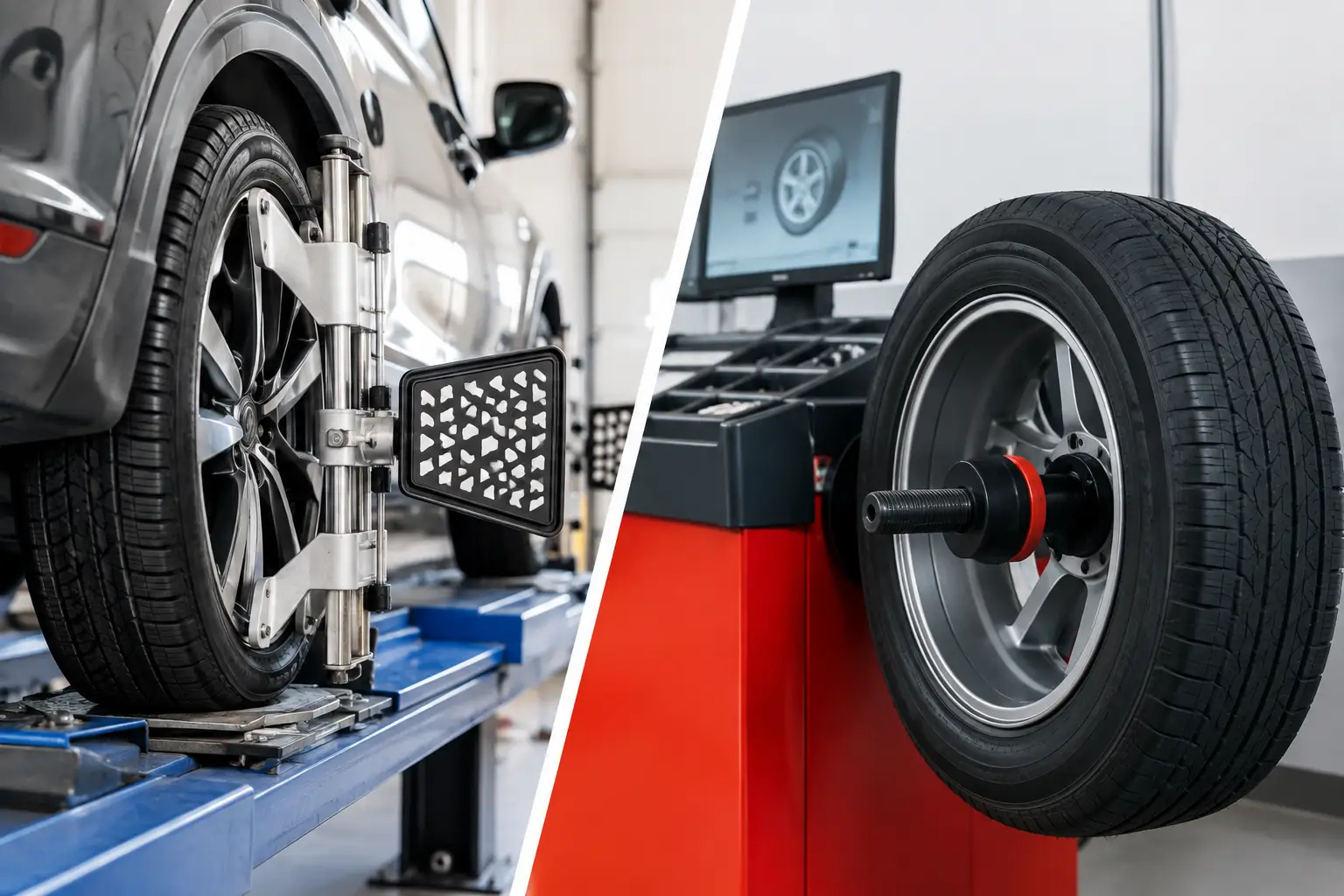
A steering wheel that shakes on the highway and a vehicle that drifts toward the shoulder can both make a drive feel wrong, but they usually point to different issues. Wheel alignment versus balancing is not an either-or choice: these are two separate tire and wheel services that affect how your vehicle handles, how long your tires last, and how confidently you can drive around Flint and Genesee County.
The good news is that the symptoms often provide useful clues. The better news is that a trained technician can inspect the tires, wheels, suspension, and steering components to identify the actual cause before recommending repairs. That matters because replacing tires or paying for the wrong service will not correct the problem.
Wheel Alignment Versus Balancing: The Basic Difference
Wheel alignment adjusts the angles of the wheels so they meet the road at the proper position and work together as the manufacturer intended. Wheel balancing corrects uneven weight distribution in a tire and wheel assembly. Alignment concerns where the wheels point. Balancing concerns how smoothly each wheel rotates.
Both services protect tire life and ride quality, but they solve different problems. A vehicle can need an alignment with perfectly balanced tires. It can also need tire balancing while the alignment is still within specification. In some cases, especially after a hard pothole impact or a tire replacement, it may need both.
What wheel alignment corrects
During an alignment, a technician measures and adjusts key wheel angles, including toe, camber, and caster where the vehicle allows adjustment. Those terms can sound technical, but the results are easy to understand: the vehicle tracks straighter, the steering wheel sits more centered, and the tires make proper contact with the road.
When alignment is off, tires can scrub against the pavement instead of rolling cleanly. That extra friction may wear out a tire much faster than expected. You may see one edge of the tread wearing more quickly than the rest, especially on the inner or outer shoulder.
Alignment can change gradually as suspension parts wear. It can also change suddenly after striking a deep pothole, curb, road debris, or other obstacle. Flint-area roads can be tough on tires and suspension, particularly after winter weather, so alignment checks are a practical part of protecting your investment in a set of tires.
What wheel balancing corrects
A tire and wheel assembly is not always evenly weighted all the way around. Even a small imbalance can become noticeable once the wheel reaches highway speed. Balancing equipment spins the assembly to identify where small counterweights should be placed. Those weights help the wheel rotate evenly.
The most common sign of an imbalance is vibration. You may feel it in the steering wheel, seat, or floor, often at a certain speed range. For example, a vibration that becomes obvious around 55 to 70 mph may point to a wheel balance issue. The exact feeling depends on which wheel is affected and the vehicle’s design.
Balancing is typically performed when new tires are installed, when tires are remounted, or when a wheel weight has fallen off. It can also be needed when a driver notices a new vibration that was not there before. However, vibration is not always a balancing issue. A bent wheel, damaged tire, worn suspension component, brake concern, or driveline problem can create similar symptoms.
How Your Vehicle Tells You What It Needs
A vehicle that pulls left or right on a flat road is often associated with alignment, although tire pressure, uneven tire wear, and certain tire designs can contribute as well. A crooked steering wheel while driving straight is another common alignment clue. So is uneven tread wear, particularly wear along one side of a tire.
A balance concern is more likely when the vehicle drives straight but develops a shake or vibration at speed. If the steering wheel shakes, the issue may be more noticeable at the front wheels. If the vibration is felt mostly through the seat, rear tire balance may be involved. These are useful starting points, not a final diagnosis.
Pay attention to changes that occur after a specific event. If the problem began right after a pothole strike, a technician should inspect more than alignment. The impact may have damaged a tire, bent a wheel, affected a suspension part, or knocked the alignment out of specification. If the vibration appeared shortly after tire service, balancing or installation should be checked, but the tires and wheels should still be inspected carefully.
Why Tire Wear Makes the Difference More Important
Tires are a major purchase, and alignment problems are especially expensive when they are ignored. A vehicle may still feel mostly normal while an improper angle quietly wears down the inside edge of a tire. By the time the wear is obvious, that tire may no longer be safe or may need replacement sooner than planned.
An imbalance can also shorten tire life by causing uneven wear patterns over time. More immediately, it can make highway driving uncomfortable and put added stress on steering and suspension components. The faster the wheels turn, the more noticeable the vibration may become.
Neither service substitutes for basic tire care. Proper tire pressure, regular rotations, tread inspections, and timely repairs all work together with alignment and balancing. A vehicle with low tire pressure can pull or feel unstable, while a tire with internal damage may vibrate even after it has been balanced.
When You May Need Both Services
New tires are normally balanced as part of installation. Whether an alignment is also needed depends on tire wear, vehicle handling, recent impacts, suspension condition, and alignment measurements. If the old tires showed uneven wear, it is wise to check alignment before putting new tires at risk.
After a collision or significant curb strike, both services may be appropriate, but the vehicle should first be inspected for bent wheels, damaged tires, and worn or damaged steering and suspension parts. An alignment adjustment cannot compensate for a broken component. Likewise, balancing a wheel will not correct a wheel that is severely bent or a tire with a structural problem.
There is also a difference between a recommended check and a needed adjustment. A trustworthy shop should measure the alignment and explain what the readings show. If the angles are within the manufacturer’s specifications and tire wear looks healthy, an adjustment may not be necessary. Clear information helps you make a sound decision instead of paying for work your vehicle does not need.
What Happens During a Professional Inspection
A proper tire and wheel visit starts with listening to the concern. Is the vehicle pulling, vibrating, wearing tires unevenly, or doing more than one of those things? The technician should also check tire pressure, tread condition, wheel condition, and visible steering and suspension components.
For balancing, the tires and wheels are removed as needed and placed on balancing equipment. The technician identifies the imbalance and applies the proper weights. If the machine results or visual inspection suggest a damaged tire or wheel, that issue should be discussed before work continues.
For alignment, the vehicle is placed on alignment equipment that measures wheel angles. Technicians inspect for loose or worn parts because those parts can prevent an alignment from holding. Adjustments are then made where the vehicle design permits, and final readings confirm whether the vehicle is within specification.
At DNC Auto Repair, the goal is to explain the reason for the recommendation in plain language, whether your vehicle needs a balance, an alignment, tire repair, suspension work, or simply a pressure adjustment. That approach helps drivers make informed decisions without guessing.
Do Not Wait for a Small Problem to Become an Expensive One
If your steering wheel is shaking, your vehicle is pulling, or your tires are wearing unevenly, schedule an inspection soon. Continuing to drive may be possible for a short time, but it can turn a minor service need into premature tire replacement or a larger suspension repair.
A smooth ride and straight tracking are more than comfort features. They are signs that your tires, wheels, steering, and suspension are working together the way they should. Taking care of the issue early gives you a better chance to protect your tires, your budget, and the people riding with you.
Leave a Reply