



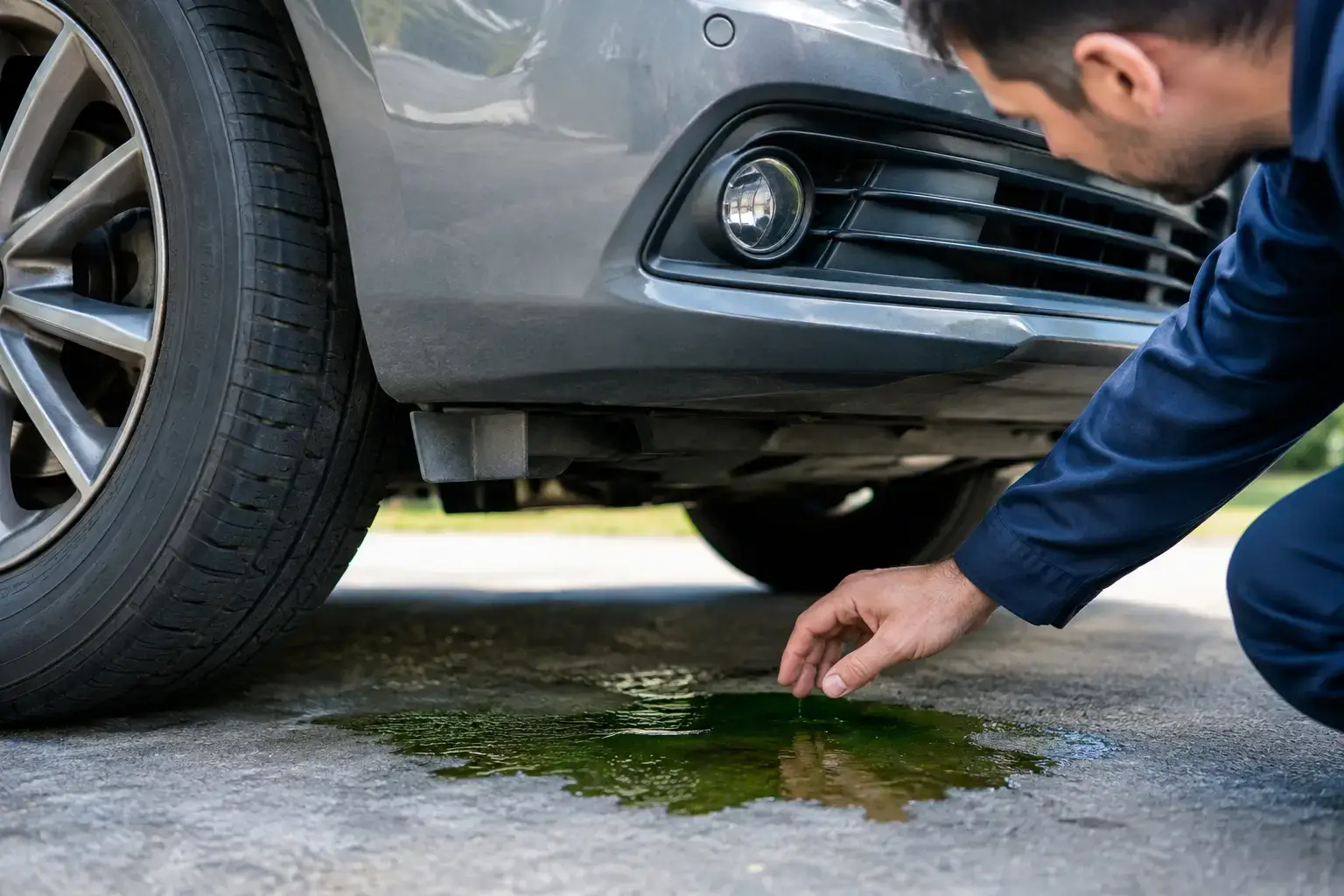
A sweet smell after parking, a puddle under the front of the vehicle, or a temperature gauge creeping higher than normal can all point to one problem: coolant leak detection is needed before a small loss turns into an overheating repair. Coolant does far more than keep an engine comfortable in summer. It carries heat away from critical engine parts, helps prevent freezing in Michigan winters, and protects the cooling system from corrosion.
When coolant is escaping, the engine may still seem to run normally for a while. That is what makes leaks easy to put off. But an engine that overheats can suffer warped cylinder heads, damaged head gaskets, or internal damage that costs far more than repairing a hose, radiator, or water pump early.
What Coolant Does for Your Vehicle
Your vehicle’s cooling system circulates a mixture of coolant and water through the engine, radiator, heater core, hoses, thermostat, and water pump. As the engine creates heat, that fluid absorbs it and releases it through the radiator. The system is pressurized, which raises the coolant’s boiling point and helps it work under demanding conditions.
A leak lowers the amount of fluid available to transfer heat. It can also allow air into the system, creating air pockets that interrupt circulation. That is why simply topping off a low reservoir may temporarily hide the symptom without solving the source of the problem.
Coolant is often green, orange, pink, yellow, blue, or purple, depending on the formula used by the vehicle manufacturer. Color can offer a clue, but it is not a reliable way to identify the correct replacement coolant. Different formulas should not be mixed casually. Using the wrong coolant can reduce corrosion protection or create deposits inside the system.
Common Signs That Point to a Coolant Leak
The clearest sign is a visible puddle. Fresh coolant often feels slightly slick and may leave a bright-colored stain beneath the vehicle. Still, not every coolant leak reaches the ground. Some fluid burns off on hot engine parts, leaks slowly inside a component, or only escapes when the cooling system is hot and pressurized.
Watch for a low coolant reservoir, especially if you have added fluid more than once. The coolant level should be checked only when the engine is cold. Never remove a radiator cap or coolant reservoir cap from a hot engine. Pressurized hot coolant can spray out and cause serious burns.
A rising temperature gauge, an overheating warning, steam from under the hood, or a heater that suddenly blows cool air also deserve quick attention. Cool air from the heater can happen when the cooling system is low and coolant is no longer flowing properly through the heater core. These signs do not always mean there is an external leak, but they do mean the system needs diagnosis.
You may also notice a sweet odor around the vehicle or inside the cabin. If the windshield fogs up with an unusual film and there is a sweet smell inside, a leaking heater core is one possibility. Because the heater core is located behind the dashboard, this repair can be more involved than replacing an accessible hose. Proper testing helps avoid guessing.
Where Cooling System Leaks Usually Start
Rubber hoses and hose clamps are common sources, particularly as a vehicle ages. Heat cycles, road salt, vibration, and time can make hoses brittle or cause clamps to lose their holding strength. A small crack may only open when the engine is hot.
Radiators can leak at plastic end tanks, seams, fittings, or from corrosion in the cooling fins. In Flint and throughout Genesee County, winter road conditions and salt can speed up corrosion on older vehicles. The radiator cap can also fail to hold the correct pressure, allowing coolant to escape or boil sooner than it should.
Water pumps are another frequent source. Many water pumps have a small weep hole designed to show when the internal seal is failing. Coolant around the pump, a drip near the front of the engine, or a grinding noise may indicate a pump problem. On some engines, the water pump is driven by the timing belt or timing chain, which can affect the labor involved in the repair.
Other possible causes include a leaking thermostat housing, cracked coolant reservoir, failed gasket, damaged heater hose, or heater core leak. In more serious cases, coolant can be lost internally through a head gasket or other engine issue. That does not mean every low-coolant condition is a head gasket failure. Testing should come before conclusions.
How Professional Coolant Leak Detection Works
A trained technician starts with the basics: checking the coolant level and condition, looking for dried residue, inspecting hoses and connections, and checking for signs of damage around the radiator and water pump. The cooling system may then be pressure tested. This test applies controlled pressure with the engine off, making leaks easier to find without waiting for the vehicle to overheat.
If an external leak is not obvious, a technician may use ultraviolet dye, inspect the system while it is running, or perform additional checks for internal engine leaks. A combustion-gas test can help identify whether exhaust gases are entering the cooling system, which may point to a head gasket or cylinder head concern.
The goal is to identify the actual failed part and explain the repair clearly. Replacing parts based on suspicion can waste money. A pressure test that reveals a loose clamp needs a different repair than a test showing a leaking radiator or an internal engine problem.
Can You Drive With a Coolant Leak?
It depends on the size and location of the leak, but driving with a known coolant leak is a risk. A very slow leak may allow you to reach a repair shop if the temperature stays normal and the coolant level is safe. Even then, it should be scheduled promptly. Coolant loss can accelerate without warning when a hose splits or a weak plastic fitting breaks.
If the temperature gauge moves into the hot range, a warning light appears, steam is visible, or you smell strong coolant, pull over safely and turn the engine off. Continuing to drive an overheating engine can turn a manageable cooling-system repair into major engine work. Let the vehicle cool completely before checking anything under the hood, and arrange for professional help if the problem is significant.
Do not rely on stop-leak products as a permanent repair. Some products can temporarily slow a minor leak, but they may also restrict small passages in the radiator or heater core. They are rarely the best answer for a vehicle you depend on every day.
Preventing Future Cooling System Problems
Regular maintenance gives technicians the chance to spot aging hoses, weak clamps, contaminated coolant, and early seepage before a breakdown. Follow your manufacturer’s recommended coolant service interval and use the specified coolant type. If the system needs service, it should be filled to the correct mixture and properly bled to remove trapped air.
It also helps to pay attention after any cooling-system repair. Check the level when the engine is cold over the next few days, and report recurring low coolant, overheating, or new smells. A system that has been repaired correctly should maintain its level and operating temperature.
At DNC Auto Repair, certified technicians can inspect cooling-system concerns, perform accurate testing, and explain what was found before work begins. Whether the solution is a small hose repair or a more involved component replacement, clear answers help you make a confident decision.
A coolant puddle or warning light is not something to wait out. Addressing it while the vehicle is still driving normally is often the simplest way to protect your engine, your budget, and your ability to get where you need to go.
Leave a Reply