



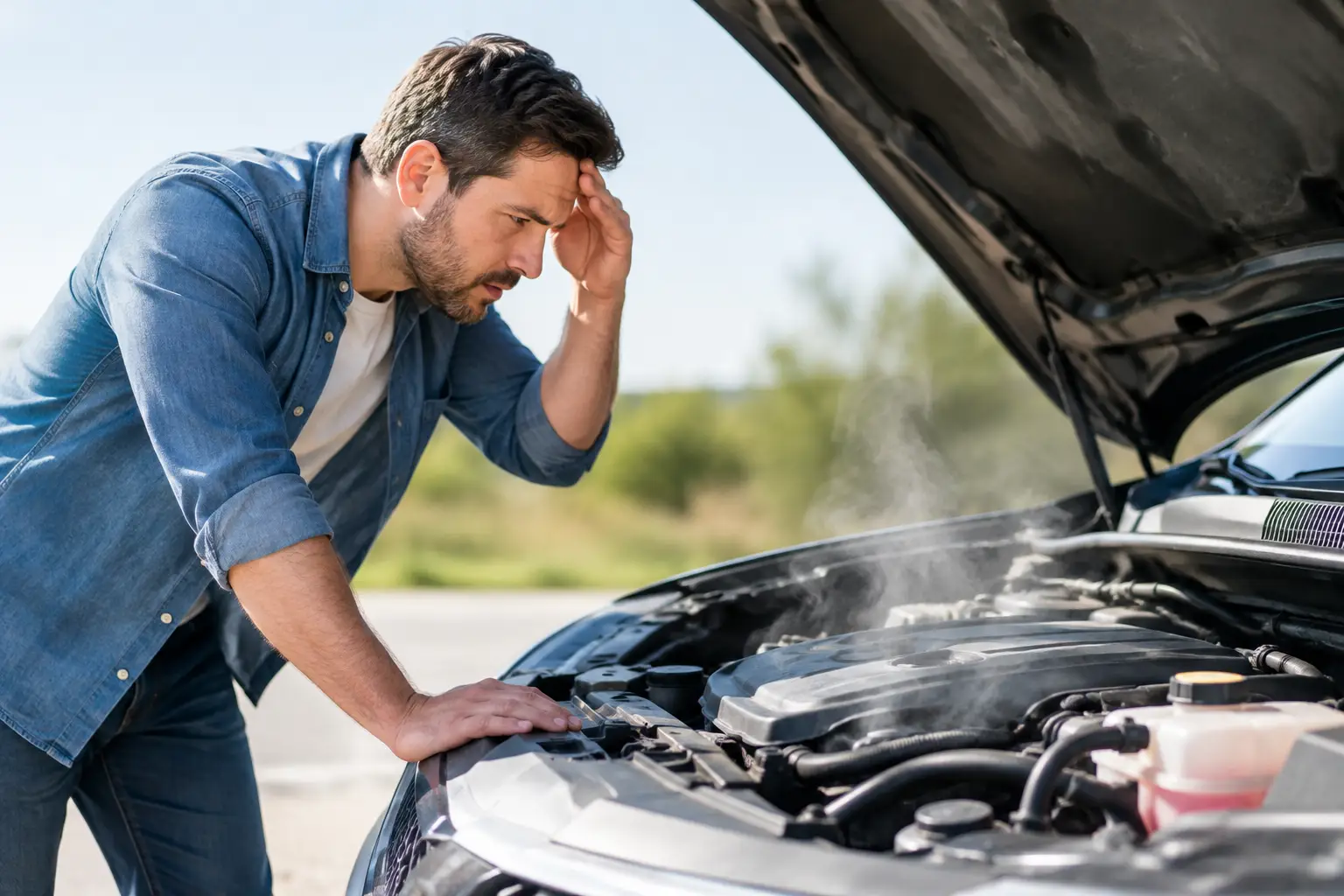
A temperature gauge moving past normal is not a warning to ignore until you get home. A hot engine can damage a head gasket, warp cylinder components, or leave you stranded with little notice. Knowing how to diagnose car overheating starts with protecting the engine and yourself before trying to find the cause.
If steam is coming from under the hood, the temperature warning light is on, or the gauge is in the red, pull over as soon as it is safe. Turn off the air conditioning, turn the heater to high if you need a little time to reach a safe stopping point, and stop the vehicle. Do not remove the radiator cap or coolant reservoir cap while the engine is hot. The cooling system is pressurized, and hot coolant can cause serious burns.
Start With the Warning Signs
Overheating does not always look the same. Some drivers see the needle rise only in slow traffic. Others notice a sweet smell, coolant dripping under the vehicle, weak heat from the vents, or white steam near the hood. In some cases, the temperature gauge may appear normal while a warning message comes and goes.
Pay attention to when the problem occurs. An engine that overheats only at idle may have a cooling fan problem. One that runs hot at highway speed may have low coolant, restricted coolant flow, or a radiator issue. If it overheats while towing, climbing hills, or running the air conditioner, the cooling system may be marginal even if it seems fine during easy driving.
A single high reading can occasionally result from a faulty sensor or gauge. Repeated overheating, however, should be treated as a real cooling-system problem until a professional inspection proves otherwise.
How to Diagnose Car Overheating Safely
After the engine has cooled completely, begin with a visual check. This is not a substitute for professional testing, but it can provide useful information and help you explain the symptoms clearly when scheduling service.
Look at the coolant reservoir first. The coolant level should fall between the marked minimum and maximum lines when the engine is cold. If the reservoir is empty or very low, do not assume topping it off solves the problem. Coolant does not normally disappear. A low level usually points to a leak, an internal engine problem, or air trapped in the system after previous work.
Check the ground where the vehicle was parked and inspect visible hoses, the radiator area, and the water pump area for dried coolant residue. Coolant can be green, orange, pink, blue, or yellow depending on the vehicle and coolant type. It often leaves a chalky stain after drying. Never mix coolants based on color alone. Using the wrong type can reduce corrosion protection or create cooling-system problems over time.
Next, inspect the radiator cap only when the engine is fully cool. A worn cap may fail to hold pressure, lowering the coolant’s boiling point and allowing overheating under load. The cap is inexpensive compared with engine repairs, but it should be tested or replaced with the correct part rather than guessed at.
Check What Happens at Idle and on the Road
The cooling fan is a common source of overheating, especially in stop-and-go traffic. With the engine at operating temperature and the air conditioning turned on, many vehicles should command the electric cooling fan to run. Keep hands, clothing, and tools away from belts and moving fan blades while observing from a safe distance.
If the fan does not run, the cause may be the fan motor, relay, fuse, wiring, coolant temperature sensor, or the vehicle’s control system. On some vehicles, the fan may cycle on and off rather than run constantly. That is normal. What matters is whether it comes on when the engine needs airflow.
If the vehicle runs hot only while stopped but cools down once it is moving, reduced airflow is a strong possibility. A damaged fan, blocked radiator fins, or debris between the radiator and condenser can keep heat from leaving the coolant. This can be especially noticeable during a Flint summer commute or while sitting in a drive-through line.
Overheating at highway speeds points in a different direction. At speed, air is moving through the radiator, so the issue may involve coolant circulation. A thermostat that does not open, a weak water pump, a partially blocked radiator, or a collapsing hose can prevent the system from moving enough coolant through the engine.
Do Not Overlook the Heater and Cabin Clues
Your heater can provide another clue because it uses hot engine coolant. If the engine temperature is climbing but the heater suddenly blows cool air, coolant may be low or air may be trapped in the system. That does not confirm the cause, but it is useful information for the technician.
A sweet odor inside the cabin, damp carpet on the passenger side, or a foggy film on the windshield can point to a leaking heater core. That leak may lower coolant levels slowly enough that the vehicle overheats only occasionally.
Also watch for exhaust changes. Persistent white exhaust smoke, a sweet smell from the tailpipe, rough running after startup, or milky-looking engine oil can indicate coolant entering places it should not. These symptoms can be associated with a failed head gasket or cracked engine component. Continuing to drive can turn a repairable problem into a major engine repair.
Common Causes and Why Testing Matters
Cooling systems are connected, which is why replacing parts based on a guess can become expensive quickly. The most common causes include:
- A coolant leak from a hose, radiator, reservoir, water pump, gasket, or heater core
- A failed thermostat that restricts coolant flow
- A weak or inoperative cooling fan and its electrical controls
- A clogged or damaged radiator that cannot release heat effectively
- A failing water pump, slipped belt, or internal circulation problem
- A pressure loss, trapped air, or combustion gases entering the cooling system
Several of these problems can create nearly identical symptoms. For example, low coolant may be caused by a visible hose leak, but it can also be caused by a water pump seep that appears only when hot. A thermostat can be tested, but poor circulation may actually come from an impeller problem inside the water pump. A check-engine light may help narrow the diagnosis, but stored codes do not automatically identify the failed part.
A proper inspection often includes a pressure test to locate external leaks, a check of coolant condition and concentration, fan operation testing, temperature readings across the radiator, and scan-tool data from the engine computer. When needed, technicians may test for combustion gases in the cooling system or inspect the system for internal restrictions. This approach identifies the cause before repair recommendations are made.
When You Should Stop Driving
Do not drive a vehicle that is actively overheating just because the destination is close. Pull over and arrange service if the gauge reaches the red zone, a temperature warning tells you to stop, steam is visible, coolant is pouring out, or the engine begins running poorly.
It may be reasonable to drive a short distance to a repair shop only if the temperature has returned to normal, there are no signs of a major leak, and the vehicle is not producing steam or warning messages. Even then, keep a close eye on the gauge and avoid heavy loads, high speeds, and air conditioning. If the temperature rises again, stop immediately.
Adding plain water in an emergency can sometimes help you get out of an unsafe location after the engine cools, but it is not a long-term repair. Water lacks the freeze and corrosion protection your cooling system needs, which matters in Michigan winters. The correct coolant mixture and the reason for the loss still need to be addressed.
Get a Clear Answer Before Engine Damage Spreads
An overheating problem is rarely fixed by simply refilling coolant and hoping for the best. The right repair depends on whether the system is leaking, losing pressure, failing to circulate coolant, or receiving inaccurate temperature information. Clear diagnostics protect both your engine and your repair budget.
At DNC Auto Repair, our technicians can inspect the cooling system, explain what is causing the temperature problem, and discuss the repair in plain language before work begins. If your gauge is running hot, acting early gives you the best chance to avoid a much larger repair and get back to dependable daily driving.
Leave a Reply