



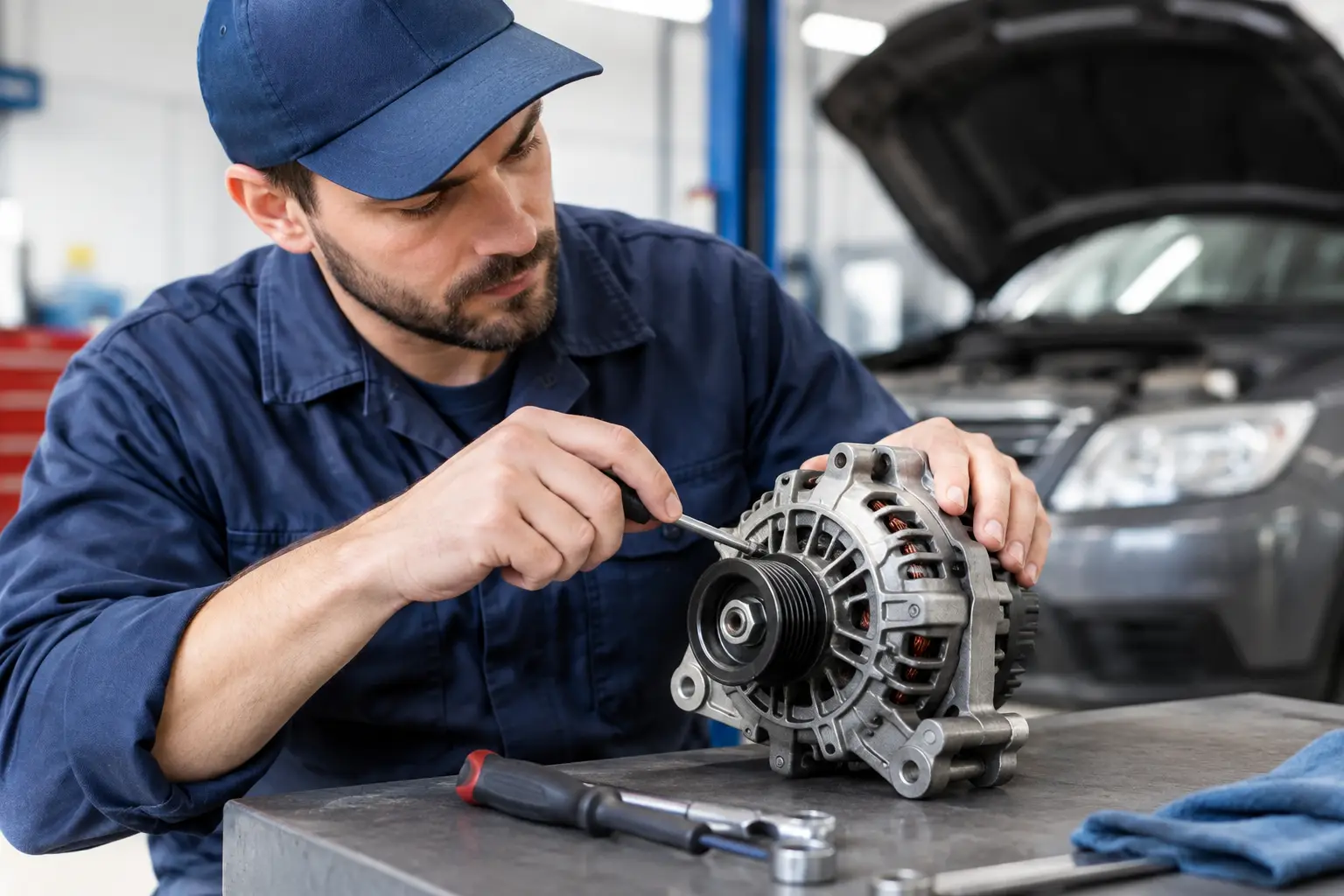
A car that starts normally in the morning but struggles on the way home can turn a routine Flint commute into an unexpected tow. Alternator repair Flint drivers need is not just about replacing a part – it starts with finding out why the charging system is not keeping the battery powered.
Your alternator supplies electrical power while the engine is running. It helps keep the battery charged and supports essential systems such as headlights, ignition, power steering, climate control, and vehicle electronics. When it begins to fail, the symptoms can be confusing because they often look like a weak battery, a wiring problem, or another electrical issue.
Signs You May Need Alternator Repair in Flint
The battery warning light is one of the most common signs of a charging-system problem. Despite its name, that light does not automatically mean the battery itself is bad. It can come on when the alternator is not producing the voltage your vehicle needs, when a belt is slipping, or when there is a problem with a cable or connection.
Pay attention to how your vehicle behaves while driving. Headlights that dim at idle and brighten when you press the accelerator can point to inconsistent charging. Interior lights may flicker, dashboard gauges can act erratically, and power windows may move more slowly than usual. Some drivers also notice a whining or grinding sound from the engine area, especially if alternator bearings are wearing out.
A repeated dead battery is another reason to schedule a diagnosis. If the battery has been replaced but continues to lose power, the real issue may be the alternator or a parasitic electrical draw. Replacing batteries without testing the full system can become expensive and leave the underlying problem unresolved.
In more advanced cases, the engine may stall after starting, particularly once the battery’s stored power has been used. Do not assume you can keep driving until the next convenient day. A vehicle with a weak charging system can shut down with little warning, leaving you without reliable lighting or power for critical systems.
Why Alternators Fail
Alternators work in a hot, high-vibration environment, so normal wear eventually takes its toll. Internal brushes, bearings, voltage regulators, and diodes can wear or fail over time. Mileage matters, but age, driving habits, and the vehicle’s electrical demands also play a role.
The alternator itself is not always the source of the problem. A worn serpentine belt may slip and prevent the alternator from turning at the proper speed. Corroded battery terminals, damaged wiring, loose grounds, and poor connections can interrupt charging just as effectively as a failed alternator. That is why a warning light alone is not enough to justify replacing a major component.
Flint weather can add stress to an already marginal system. Cold starts require more from the battery, while defrosters, heater blowers, headlights, and wipers all place added demands on the electrical system. Summer heat can also shorten battery life and expose weaknesses in charging components. If a problem appears only during cold mornings or with several accessories running, that detail can help the technician narrow down the cause.
What a Proper Alternator Diagnosis Includes
A reliable repair begins with testing, not guessing. A technician should inspect the battery condition, test charging voltage and output under load, and check for voltage drop across the related cables and connections. The belt, tensioner, battery terminals, fuses, and grounds deserve inspection as well.
Modern vehicles can make diagnosis more complicated. Many vehicles use computer-controlled charging systems that adjust output based on battery condition, electrical demand, and engine operation. Some require battery registration or system resets after battery replacement. A basic voltage check may identify an obvious failure, but a complete evaluation is the better way to avoid replacing good parts.
At DNC Auto Repair, experienced technicians use modern diagnostic equipment to identify whether the concern is the alternator, battery, belt, wiring, or another part of the electrical system. The goal is clear: explain what failed, why it matters, and what repair is needed before work moves forward.
Alternator Repair or Replacement: What Makes Sense?
In most late-model vehicles, alternator replacement is more common than rebuilding the unit in the vehicle. Replacing the alternator can provide a dependable long-term repair when internal components have failed, especially when a quality replacement part is available with warranty coverage.
Repair may be practical in certain cases, such as correcting a damaged wire, loose connector, corroded terminal, failed belt, or tensioner issue. These repairs can restore proper charging without replacing the alternator. The right choice depends on the test results, the vehicle’s age, the condition of related components, and the availability of parts.
Cost also depends on the vehicle. Some alternators are easy to reach; others are buried behind brackets, near the wheel well, or under other engine components. A vehicle with a belt-driven alternator may need a straightforward repair, while a hybrid or vehicle with advanced electrical architecture requires additional care. Honest pricing means accounting for the actual diagnosis, parts, labor, and any related repairs that are necessary for a dependable result.
Can You Drive With a Bad Alternator?
It is best not to drive any farther than necessary once you suspect alternator failure. The vehicle may run briefly on battery power, but the amount of time varies widely. A fully charged, healthy battery may provide enough power for a short trip, while a weak battery can leave you stranded quickly.
Avoid treating a jump-start as a fix. A jump-start may get the engine running, but it does not restore the alternator’s ability to charge the battery. If the charging system is failing, the vehicle can stall after the jump cables are removed or later during the drive.
If you see the battery light along with dim lights, warning messages, overheating, burning smells, or unusual noises, pull over safely and arrange service. A slipping or damaged belt can affect more than the alternator on some vehicles. Depending on the engine design, it may also affect cooling-system operation, which can lead to overheating.
Protecting Your Vehicle’s Charging System
You cannot prevent every alternator failure, but routine maintenance helps catch related issues early. During scheduled service, ask for the battery and charging system to be checked, especially before winter or before a long road trip. Keeping battery terminals clean and secure, replacing worn belts on time, and addressing dashboard warning lights promptly can reduce the chance of an inconvenient breakdown.
Be cautious with aftermarket electronics as well. High-powered audio equipment, added lighting, and accessory installations can place extra demand on the factory charging system if they are not properly matched and installed. That does not mean you cannot add accessories, but it does mean the electrical system should be considered as a whole.
A charging problem is stressful because it can make your vehicle feel unpredictable. The good news is that a careful diagnosis can replace uncertainty with a clear repair plan. If your battery light is on or your vehicle is showing the warning signs, having the system checked early is usually the safest and most cost-conscious next step.
Leave a Reply