



A crash can leave your vehicle looking mostly fine while hiding damage that affects how it steers, brakes, protects you, or wears its tires. This collision damage assessment guide helps Flint-area drivers understand what to check after an accident, what a professional inspection should cover, and how to make repair decisions without guessing.
Start With Safety, Not Appearance
After a collision, the first question is not whether the bumper can be repaired. It is whether the vehicle is safe to drive. If you see fluid leaking, smoke, warning lights, a tire rubbing against the body, a bent wheel, loose parts, or a door that will not latch correctly, do not continue driving it. Arrange a tow or have the vehicle inspected where it sits.
Even after a low-speed impact, pay attention to changes in the way the vehicle feels. A steering wheel that is off-center, pulling to one side, vibration at highway speed, unusual braking, or a new clunking sound can point to suspension, wheel, alignment, or structural damage. These issues may not be visible from the outside, but they can affect control of the vehicle.
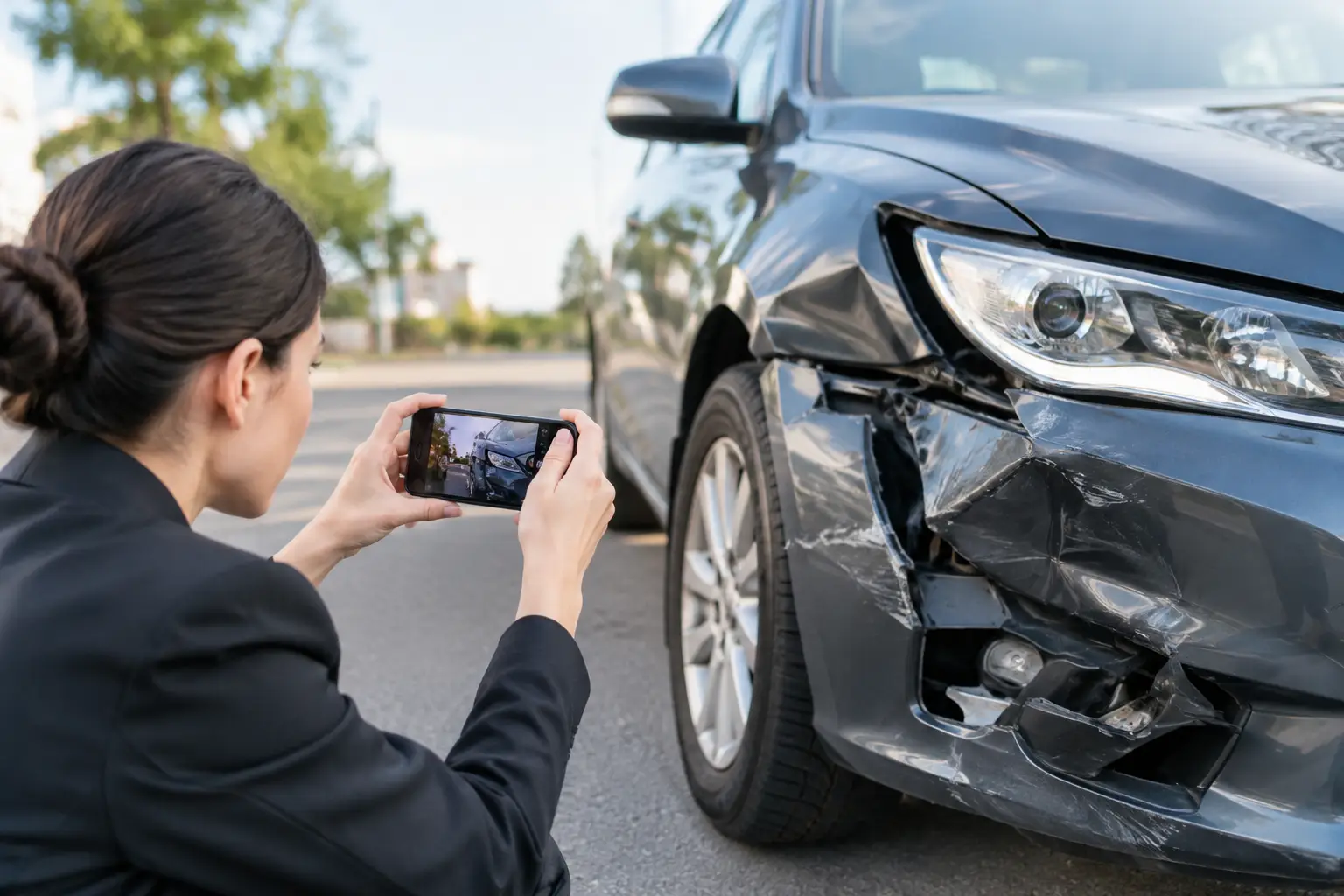
If the vehicle is drivable, take a few moments to document the condition before cleaning it or moving parts around. Photos and notes are useful for insurance discussions, repair planning, and keeping track of damage that may become more noticeable later.
Document the Damage Before Repairs Begin
Good documentation gives you a clearer starting point. Photograph the full vehicle from several angles, then take close-up photos of dents, cracked lights, panel gaps, broken trim, paint transfer, and damaged wheels or tires. Include the other vehicle, the scene, and any relevant road conditions when it is safe to do so.
Inside the vehicle, check for warning messages and note whether airbags deployed. If an airbag has deployed, the repair may involve more than replacing the airbag itself. Seat belts, sensors, trim panels, airbag control components, and steering wheel or dashboard parts may also need inspection or replacement.
Write down what happened while the details are fresh. Include the approximate speed, where the impact occurred, whether the vehicle was moving or parked, and any changes you notice while driving afterward. A clear description can help technicians focus the initial inspection and explain why certain repairs are recommended.
What a Collision Damage Assessment Should Include
A proper assessment is more than a walk-around and a quick estimate for paintwork. The visible damage matters, but the inspection should also look behind the affected panels and underneath the vehicle.
Exterior Panels, Paint, and Lighting
Technicians assess whether a panel can be repaired safely or should be replaced. A shallow dent in a metal door may be repairable, while a torn bumper cover, sharply creased panel, or damaged mounting area may require replacement. Paint damage also needs attention because exposed metal can rust, especially through Michigan winters and road-salt season.
Headlights, taillights, fog lights, mirrors, grilles, and bumper components should be checked for cracks, loose mounts, moisture intrusion, and proper operation. Modern bumpers often contain sensors, cameras, radar units, wiring, and brackets. A bumper that looks acceptable at a glance can still have damage that affects safety features.
Frame, Unibody, and Structural Areas
Many passenger vehicles use unibody construction, meaning the body and structural support system are integrated. A collision can shift or deform rails, aprons, pillars, floor sections, or mounting points even when the damage does not look dramatic.
A qualified shop uses measuring equipment and repair procedures to determine whether structural components remain within specifications. This matters because proper structural repair helps doors align correctly, protects crash-zone performance, and supports accurate suspension alignment. Frame straightening is not a cosmetic service. It is a safety-related repair that should be based on measurements, not assumptions.
Suspension, Steering, Wheels, and Tires
A curb strike or impact near a wheel can bend components that are difficult to spot without lifting the vehicle. The assessment should examine wheels, tires, control arms, tie rods, struts, shocks, hubs, wheel bearings, and related mounting points.
An alignment check is often appropriate after a collision, but alignment alone does not fix a bent or damaged part. If a technician finds a worn, shifted, or bent component, it must be addressed before final alignment. Otherwise, the vehicle may continue pulling, wear through tires early, or handle unpredictably in wet or snowy conditions.
Mechanical, Electrical, and Safety Systems
Front-end impacts can affect radiators, cooling fans, air-conditioning condensers, active grille shutters, engine mounts, and wiring. Rear impacts may damage exhaust components, trunk floors, fuel-system areas, backup cameras, parking sensors, or liftgate hardware.
A complete collision inspection should include a diagnostic scan for stored trouble codes and a check of warning lights. Depending on the vehicle and repairs performed, advanced driver-assistance systems may need calibration. Features such as forward-collision alerts, lane assistance, blind-spot monitoring, adaptive cruise control, and parking assistance rely on sensors being positioned and calibrated correctly.
Why Estimates Can Change After Disassembly
A repair estimate is an informed starting point, not always the final repair plan. Some damage is hidden behind the bumper, beneath trim, or inside a panel. Once the affected areas are disassembled, a technician may find broken brackets, damaged absorbers, bent supports, wiring concerns, or corrosion that was not visible during the first inspection.
This is not automatically a red flag. It is a normal part of collision repair, provided the shop explains the findings, documents the additional damage, and communicates any change in cost or timeline. Transparent communication matters. You should understand what was found, why it affects the repair, and what options are available before work proceeds.
There can also be a parts-related trade-off. Original equipment parts, aftermarket parts, recycled parts, and reconditioned components may be considered depending on the vehicle, availability, insurance requirements, budget, and repair area. The best choice depends on fit, safety, warranty considerations, and the condition of the specific part, not simply the lowest price.
Questions to Ask Before Approving Collision Repairs
You do not need to be a mechanic to ask useful questions. A trustworthy repair shop should give you plain answers about the damage and the repair plan.
Ask whether the vehicle has structural, suspension, or safety-system damage in addition to cosmetic damage. Ask whether diagnostic scanning, alignment, or sensor calibration is included or recommended. If parts are being replaced, ask what type of parts will be used and whether there are warranty options.
It is also reasonable to ask about the expected timeline and what could delay completion. Parts availability, insurance approvals, supplemental damage, paint curing, and calibration requirements can all affect scheduling. A clear answer is better than an unrealistic promise.
For Flint drivers who want one local team to handle collision, body, paint, mechanical, and alignment-related concerns, DNC Auto Repair can inspect the full condition of the vehicle instead of treating the damaged panel as the only issue.
Do Not Skip the Final Check
Before picking up your vehicle, look over the repaired area in good lighting. Paint color and finish should appear consistent from normal viewing distance, panel gaps should be even, and doors, trunk lids, hoods, and liftgates should open and close properly. Check lights, windows, mirrors, locks, cameras, and dashboard warnings.
During the first few drives, listen for rattles and pay attention to steering, braking, and vehicle tracking. A repair shop should want to know if something does not feel right after the repair. Prompt follow-up can often resolve an adjustment issue before it becomes a larger concern.
A collision is disruptive enough. The right assessment replaces uncertainty with a clear picture of what your vehicle needs, what the repair involves, and what it takes to get back on the road with confidence.
Leave a Reply