



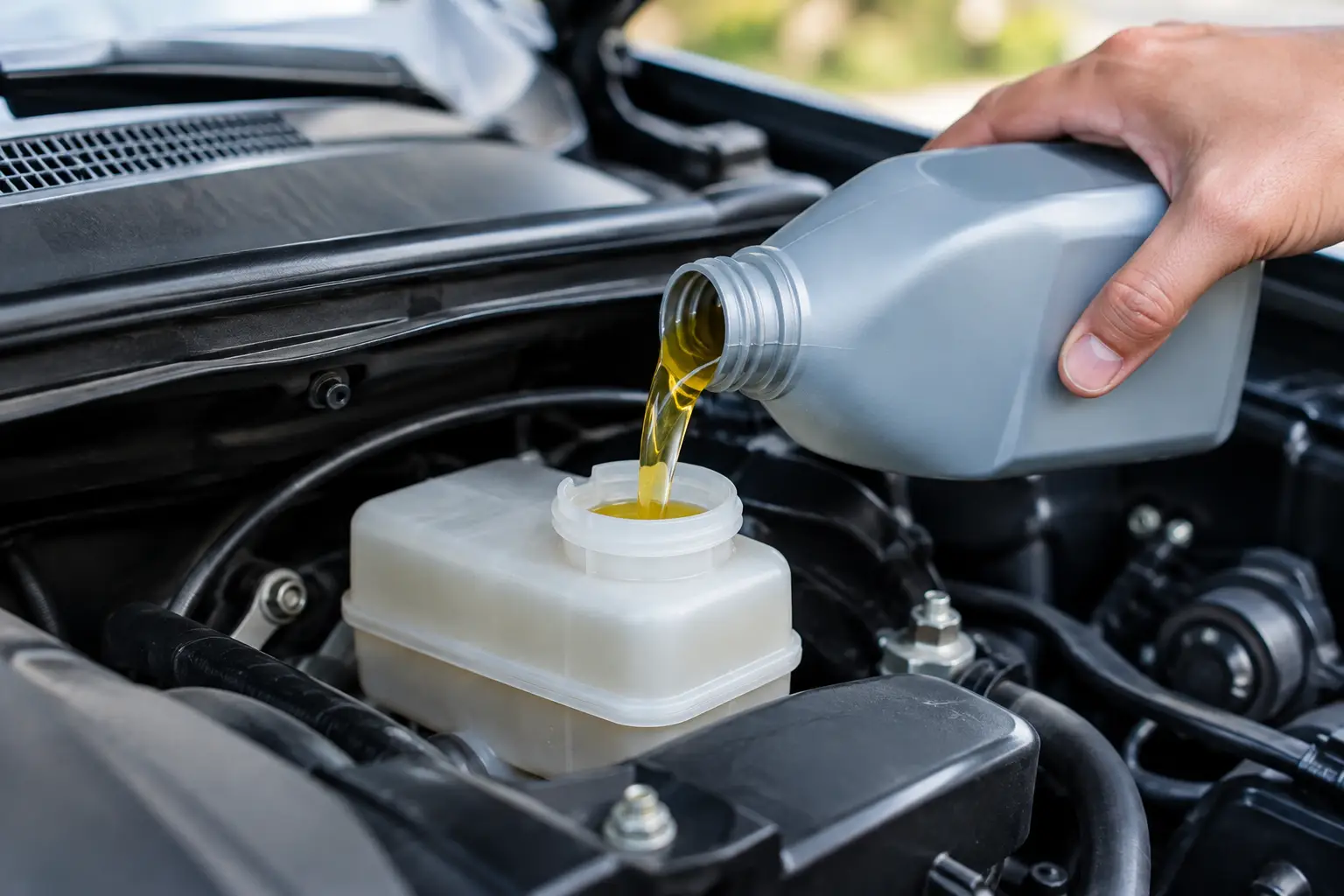
A brake pedal can feel perfectly normal while the fluid behind it is slowly losing its ability to protect your braking system. That is why knowing when to change brake fluid matters. It is not maintenance you can see from the driver’s seat, but it can affect how reliably your vehicle stops when traffic suddenly slows, roads are wet, or a Michigan winter commute turns slick.
Brake fluid is a small part of your vehicle’s overall maintenance plan, yet it does a critical job. Your brake pedal sends force through this hydraulic fluid to apply the brakes at each wheel. Clean, properly maintained fluid helps that system respond as designed. Old or contaminated fluid can contribute to expensive brake repairs and, more importantly, reduce your safety margin on the road.
When to Change Brake Fluid
For many vehicles, a brake fluid replacement is recommended about every two to three years. Some manufacturers specify a mileage interval, often between 20,000 and 45,000 miles, while others rely mostly on time. The best starting point is your owner’s manual because the correct interval can vary by vehicle, brake system design, and fluid type.
If your manual does not list a specific schedule, having the fluid inspected during routine maintenance is a sensible approach. A technician can check its condition, moisture content, and the brake system for leaks or worn components. This is more reliable than simply judging the fluid by color.
Time matters even for vehicles that do not rack up many miles. Brake fluid is hygroscopic, meaning it naturally absorbs moisture from the air over time. Moisture can enter through normal venting at the reservoir and through aging rubber brake hoses. A car that mostly sits in the driveway can still need brake fluid service.
For Flint-area drivers, seasonal temperature swings, wet roads, and road salt make regular inspections especially worthwhile. Salt does not directly contaminate the fluid inside a sealed hydraulic system, but it can speed up corrosion on brake lines, fittings, and other exterior components. Catching concerns early helps avoid a small maintenance visit becoming a larger brake repair.
Why Old Brake Fluid Creates Problems
Fresh brake fluid has a high boiling point. As it absorbs water, that boiling point drops. Under hard braking, driving downhill, hauling a load, or repeated stop-and-go traffic, overheated fluid can form vapor. Because vapor compresses more than fluid, the brake pedal may feel soft or travel farther than usual. In severe cases, braking performance can fade.
Moisture also creates corrosion inside the brake system. That can affect steel lines, calipers, wheel cylinders, master cylinders, and the precise components used in anti-lock braking systems. ABS modules can be costly, so replacing fluid on schedule is often far less expensive than dealing with corrosion-related damage later.
Old fluid may also carry fine debris from normal component wear. That debris can interfere with seals and internal passages over time. A proper brake fluid service removes old fluid from the system and replaces it with the manufacturer-approved type, helping protect components that are much more expensive than the fluid itself.
Signs Your Brake Fluid May Need Attention
A change in brake pedal feel deserves prompt attention, even if it does not automatically mean the fluid is the cause. A soft, spongy pedal can point to moisture-contaminated fluid, air in the brake lines, a hydraulic leak, or another brake system issue. A pedal that slowly sinks toward the floor while you hold pressure may indicate a problem requiring immediate inspection.
Other signs include a brake warning light, a low brake fluid level in the reservoir, or a burning smell after heavy braking. If the vehicle pulls while braking, makes grinding noises, or vibrates through the pedal or steering wheel, do not assume a fluid change will fix it. Those symptoms can be related to pads, rotors, calipers, tires, suspension parts, or other concerns that need diagnosis.
Brake fluid color can offer a clue, but it is not a final diagnosis. Fresh fluid is often clear to light amber. Dark fluid may suggest age or contamination, although color alone cannot tell you how much moisture is present or whether the system has an internal issue. Testing and inspecting the system is the better call.
Brake Fluid Change vs. Brake Inspection
A brake fluid change is preventive maintenance. A brake inspection looks at the complete braking system: pads, rotors, calipers, hoses, lines, parking brake components, fluid level, and brake operation. Both are valuable, but they answer different questions.
If your vehicle is due for fluid based on its maintenance schedule and is braking normally, a routine fluid exchange may be all that is needed. If the pedal feels different, the warning light is on, or you see fluid under the vehicle, start with an inspection. Adding fluid without finding out why it is low can hide a leak and delay a necessary repair.
There is also a difference between topping off the reservoir and changing the fluid. Topping it off only adds new fluid to one part of the system. It does not remove moisture and old fluid from the brake lines, calipers, or master cylinder. In most cases, a falling fluid level should be checked rather than automatically filled, since it may be related to worn brake pads or a leak.
Use the Right Brake Fluid, Not Just Any Fluid
Brake fluid types are not interchangeable simply because the bottle fits on a shelf. Most passenger vehicles use DOT 3, DOT 4, or DOT 5.1 fluid, which are glycol-based. DOT 5 is silicone-based and is generally not compatible with systems designed for glycol-based fluid. Using the wrong product can damage seals and create serious braking problems.
Your owner’s manual or the brake fluid reservoir cap will usually identify the required specification. A qualified technician should also follow the manufacturer’s service procedure, especially on newer vehicles with ABS, electronic stability control, and advanced driver-assistance systems. Some vehicles require a scan tool or a specific bleeding sequence to service the system correctly.
This is one reason brake fluid service is not always a simple do-it-yourself project. Air introduced into the system, a damaged bleeder screw, contaminated fluid, or an incorrect procedure can leave the vehicle unsafe to drive. For drivers who are comfortable doing their own maintenance, the right tools, correct fluid, and service information are essential. For everyone else, it is a quick service best handled with a full brake check.
What to Expect During Brake Fluid Service
A professional brake fluid service usually begins with checking the system for leaks, worn brake parts, damaged lines, and concerns that should be repaired before the fluid is replaced. The technician then removes the old fluid and bleeds fresh, manufacturer-approved fluid through each brake circuit until the system is properly serviced.
Afterward, the brake pedal should be checked for a firm, consistent feel, and the fluid level should be set correctly. If an inspection identifies worn pads, thin rotors, sticking calipers, or corrosion, you should receive a clear explanation of what was found and what should be addressed now versus monitored for later.
At DNC Auto Repair, brake service is approached as a safety system inspection, not just a fluid replacement. That means looking beyond the reservoir so you can make an informed decision about your vehicle, your budget, and the work it truly needs.
If it has been several years since your brake fluid was changed, or you cannot remember the last time it was inspected, schedule a brake check before the next long drive or seasonal weather change. A little attention now can help keep every stop predictable when you need it most.