



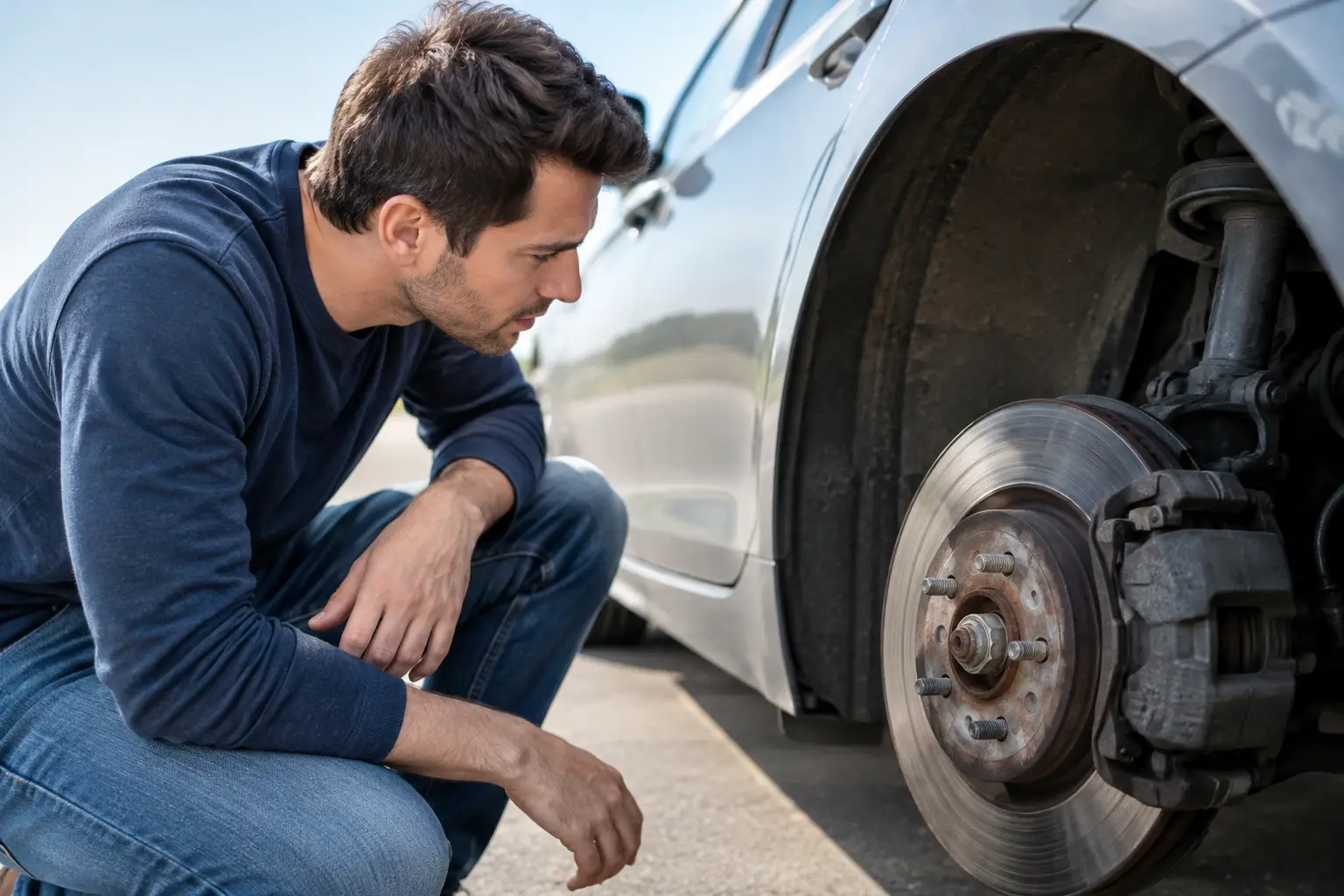
A long downhill drive, repeated hard stops in traffic, or towing a loaded trailer can put more heat into your brakes than they can release. Knowing how to spot brake fade gives you time to slow down safely and avoid turning a brake warning sign into an emergency.
Brake fade is not an everyday noise or a minor annoyance to ignore. It is a loss of braking performance caused by excessive heat. Your vehicle may still slow down, but it can take more pedal pressure and more distance than usual to stop. That difference matters when traffic stops unexpectedly, roads are wet, or a child steps into a crosswalk.
What Brake Fade Feels Like Behind the Wheel
The most common sign is a brake pedal that feels different after repeated braking. Depending on what is overheating, the pedal may feel firm but require unusually heavy pressure to slow the vehicle. In other cases, it may feel soft, spongy, or sink lower toward the floor.
You may also notice that the vehicle does not slow as quickly as it did a few minutes earlier. If you are pressing the pedal harder than normal but your stopping distance is increasing, treat that as a serious warning. Do not assume the brakes will recover before the next stop.
A sharp burning smell after heavy braking is another frequent clue. Overheated brake pads, rotors, or other components can produce an acrid odor that may resemble hot metal or burnt carpet. Pull over when it is safe to do so and let the braking system cool naturally. Do not spray water on hot brakes, since sudden cooling can damage components.
Other signs can include smoke near a wheel, a brake warning light, vibrations during braking, or a vehicle that pulls to one side. These symptoms do not always mean brake fade, but they do mean the braking system needs attention. A wheel that is much hotter than the others can point to a sticking caliper or parking brake that is not releasing fully, creating heat even during normal driving.
Why Brake Fade Happens
Your brakes turn motion into heat. During ordinary city driving, the pads and rotors have enough time between stops to shed that heat. Brake fade occurs when heat builds faster than the system can manage it.
This can happen on long hills, during stop-and-go traffic, after repeated high-speed stops, or when a vehicle is carrying a heavy load. Flint-area drivers may also run into trouble when they ride the brakes on steep ramps, use a lower gear too little on hilly roads, or continue driving after a brake component begins sticking.
There are two common types of brake fade. Pad fade occurs when overheated pad material loses some of its ability to grip the rotor. The pedal can still feel relatively firm, but the vehicle does not slow as expected. Fluid fade happens when brake fluid becomes extremely hot and can begin to boil. Because vapor compresses more than brake fluid, the pedal may feel soft or travel farther than normal.
A soft pedal can also be caused by air in the brake lines, a fluid leak, or a failing hydraulic component. That is why it is not safe to diagnose the problem based on pedal feel alone. Any sudden change in brake response deserves a professional inspection.
How to Spot Brake Fade Before You Lose Stopping Power
The best time to identify brake fade is before the pedal becomes difficult to control. Pay attention to patterns. If your brakes work normally on a short trip but feel weaker after a long descent or a series of hard stops, heat is likely part of the problem.
Listen for changes, too. Brakes that begin squealing, grinding, or making a harsh scraping sound after getting hot may have worn pads, damaged hardware, or rotor problems. Noise by itself does not prove fade, but it should not be dismissed, especially if it arrives with a burning smell or reduced stopping power.
A brake pedal that changes only when the vehicle is hot is worth checking soon. A pedal that feels low, spongy, or inconsistent at any temperature needs more urgent attention. You should also watch for a brake warning light or an illuminated ABS light. These lights do not specifically diagnose fade, but they can signal a condition that affects safe braking.
It is tempting to test the brakes repeatedly once they feel unusual. Avoid doing that. Repeated hard pedal applications generate more heat and can make the problem worse. Instead, create space between your vehicle and traffic, reduce your speed gradually, and find a safe place to stop.
What to Do If Your Brakes Start Fading
If you suspect brake fade while driving, stay calm and focus on reducing speed without demanding more from the brakes than necessary. Take your foot off the accelerator, turn on your hazard lights if traffic conditions call for it, and increase your following distance right away.
Use a lower gear to help control speed if your vehicle has a conventional automatic with selectable gears, manual mode, or a manual transmission. Engine braking reduces the amount of work your brakes must do. Do not shift into park while moving, and do not shift abruptly into a gear that causes the engine to over-rev.
Brake gently and steadily when you need to slow down. Pumping the pedal is generally not helpful on modern vehicles with hydraulic brakes and ABS, unless your vehicle manual specifically directs otherwise. If the pedal goes to the floor or the vehicle will not slow adequately, use the parking brake carefully and gradually if it is safe to do so. A sudden pull on a mechanical parking brake can lock the rear wheels and cause a skid.
Once you are safely stopped, let the brakes cool. Do not continue driving just because the pedal feels better after a few minutes. Heat-related brake trouble often returns under the same conditions, and the original cause may still be present.
Brake Fade vs. Other Brake Problems
Brake fade is often confused with worn brake pads, warped rotors, or a brake fluid leak. They can overlap, but they are not the same issue.
Worn pads may squeal or grind and can reduce braking performance over time. Rotor problems often cause a pulsing pedal or steering-wheel vibration when braking. A fluid leak may leave a low brake-fluid level and create a soft pedal even on a cold vehicle. A seized caliper may make the vehicle pull, create a burning smell, and overheat one wheel without any long downhill drive.
The difference matters because the repair can range from replacing pads and rotors to correcting a sticking caliper, flushing contaminated brake fluid, repairing a hydraulic leak, or addressing damaged brake hoses. A proper inspection identifies the real source of the heat or loss of pressure instead of replacing parts based on a guess.
When to Schedule a Brake Inspection
Schedule brake service promptly if you have noticed reduced stopping power, a burning odor, smoke near a wheel, repeated brake fade, grinding, pulling, or a pedal that feels soft or low. If the brake warning light is on, the pedal suddenly drops to the floor, or the vehicle cannot stop normally, do not drive it. Arrange for it to be towed.
Brake fluid service is especially important because brake fluid absorbs moisture over time. Moisture lowers the fluid’s boiling point, making fluid fade more likely during demanding braking. The right service interval depends on the vehicle, the fluid type, and driving conditions, so following the manufacturer schedule is a good starting point.
At DNC Auto Repair, certified technicians can inspect pad thickness, rotor condition, caliper operation, brake hoses, fluid condition, and the rest of the system to explain what is causing the problem and what repairs are actually needed. Clear answers matter when your vehicle is responsible for getting you to work, school, appointments, and home safely.
Your brakes should feel predictable every time you press the pedal. If they do not, give yourself room on the road and get the concern checked before the next steep hill, busy commute, or sudden stop asks more of them.
Leave a Reply