



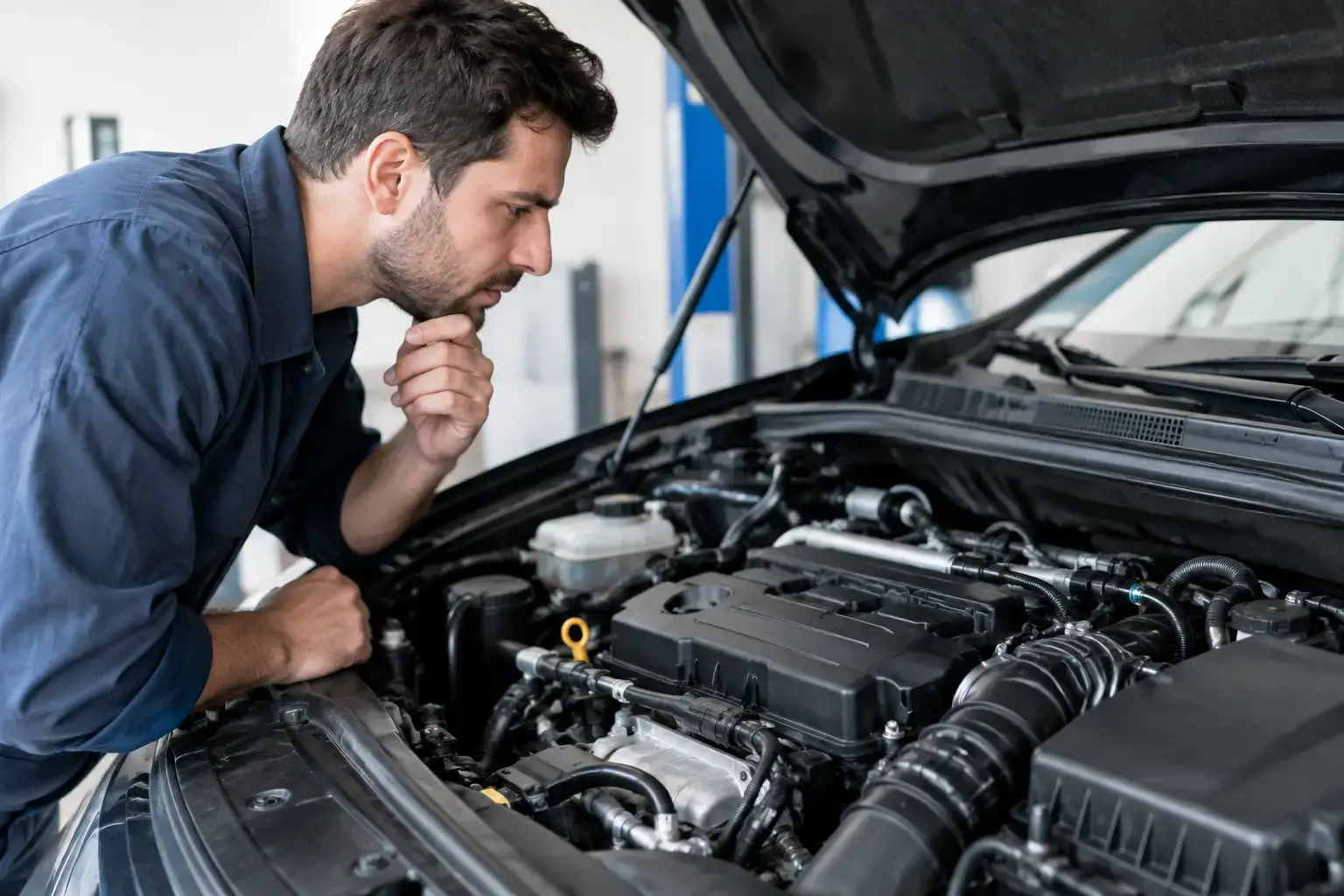
A knock under acceleration can make any driver tense up, especially when the vehicle is needed for work, school runs, or a commute across Flint. Understanding what causes engine knocking starts with one key fact: “knocking” describes a sound, not one specific failed part. Some knocks come from abnormal combustion and may be corrected before damage occurs. Others point to internal engine wear that needs prompt attention.
The sound, timing, and driving conditions all matter. A light rattle only when climbing a hill is very different from a deep, steady thump that gets faster with engine speed. Paying attention to those details helps a technician find the cause accurately and helps you avoid replacing parts that are not actually the problem.
What Causes Engine Knocking?
In many vehicles, engine knock happens when fuel burns at the wrong time or too violently inside the cylinder. During normal combustion, the spark plug ignites the air-fuel mixture in a controlled flame. Pressure builds smoothly and pushes the piston down.
With spark knock, also called detonation or pinging, part of that mixture ignites on its own before the normal flame has finished burning. The resulting pressure waves collide inside the cylinder, creating a metallic rattle or ping. Modern vehicles use knock sensors to detect this and adjust ignition timing, but a sensor can only compensate so much when another problem is present.
A deeper knocking sound can be mechanical rather than combustion-related. Wear in engine bearings, connecting rods, pistons, or related components can create clearance where there should be a precise fit. This type of knock is more serious because continued operation can turn a repairable issue into major engine damage.
Low-Quality or Incorrect-Octane Fuel
Using fuel with an octane rating below what the manufacturer requires is a common cause of spark knock. Higher-octane fuel resists premature ignition. Vehicles designed for regular gas generally do not benefit from premium fuel, but engines that specifically call for premium may knock, lose power, or run less efficiently on lower-octane gasoline.
Bad or contaminated fuel can also cause rough running, hesitation, and pinging. If the sound began immediately after filling the tank, tell your repair shop where and when you purchased fuel. That detail can be useful during diagnosis.
Carbon Buildup in the Combustion Chamber
Over time, carbon deposits can collect on piston tops, valves, and inside the combustion chamber. These deposits take up space, effectively increasing compression, and they can hold heat after the engine is shut down. Both conditions make abnormal combustion more likely.
Carbon buildup is more common on engines that make frequent short trips, burn oil, or have direct fuel injection. The right cleaning procedure depends on the engine and the amount of buildup. Pouring random additives into the tank is not always the answer, particularly when a mechanical issue or sensor problem is also present.
Incorrect Timing, Faulty Sensors, or Engine Management Problems
Your vehicle’s computer constantly manages ignition timing, fuel delivery, airflow, and operating temperature. A failing knock sensor, mass airflow sensor, oxygen sensor, or other related component can provide inaccurate information to the computer. Timing may become too advanced, the mixture may run too lean, or the engine may operate outside its intended range.
Worn or incorrect spark plugs can contribute as well. A plug with the wrong heat range may run too hot, while excessive gap or ignition problems can cause misfires and drivability concerns. These issues are why a proper diagnostic scan and inspection are more useful than guessing based on noise alone.
Overheating and a Lean Air-Fuel Mixture
Engines are more likely to knock when they run too hot. Low coolant, a thermostat issue, a weak water pump, a restricted radiator, or cooling-fan trouble can raise combustion temperatures. If the temperature gauge is above normal, steam is visible, or a warning light comes on, stop driving as soon as it is safe to do so.
A lean mixture means there is too much air and not enough fuel in the cylinders. Vacuum leaks, fuel delivery problems, clogged injectors, and intake issues can all contribute. You may notice a lack of power, a check engine light, or rough idle along with the knocking sound.
When an Engine Knock May Mean Internal Damage
A low, dull knock from the lower part of the engine deserves immediate attention. This is often called rod knock because worn connecting-rod bearings are a possible cause. As bearings wear or lose lubrication, the rod can move excessively on the crankshaft journal and create a pronounced knocking sound.
Low oil level, old oil, the wrong oil viscosity, a blocked oil passage, or low oil pressure can speed up bearing damage. Check the oil level on level ground after the engine has been off for a few minutes. If the oil-pressure warning light comes on, shut the engine off as soon as you can safely do so. Do not assume adding oil will undo damage that has already occurred.
Other mechanical sounds can be mistaken for engine knock. Piston slap may create a hollow noise when the engine is cold that lessens as it warms up. A worn timing component, loose accessory, cracked flexplate, exhaust leak, or transmission issue can also produce a tapping, rattling, or knocking sound. That is why technicians listen to the engine in different conditions and inspect more than just the obvious area.
How to Tell Whether the Noise Is Urgent
Any new engine noise is worth scheduling for, but certain signs call for faster action. Avoid driving the vehicle and arrange an inspection promptly if the knock is deep or loud, continues at idle, gets worse as RPM increases, or appears with an oil-pressure warning light.
The same is true if you notice overheating, a flashing check engine light, a major loss of power, smoke, or a strong burning smell. Continuing to drive with a mechanical knock can damage the crankshaft, engine block, or other expensive components. In some cases, towing is the less expensive choice.
A light ping only during hard acceleration may not require an emergency stop, but it should not be ignored. Ease off the throttle, avoid towing or heavy loads, and check whether the vehicle has the fuel grade specified on the fuel door or in the owner’s manual. If the noise returns, schedule diagnostics rather than simply switching fuel grades repeatedly.
What a Professional Engine Knock Diagnosis Looks Like
A reliable diagnosis begins with questions: When does the sound occur? Is the engine cold or fully warmed up? Did it begin after fueling, an oil change, an overheating event, or a repair? Even a short recording of the sound can help, as long as it is safe to make one.
At the shop, the technician may check oil level and condition, scan for diagnostic trouble codes, review live sensor data, inspect ignition components, test fuel and cooling system operation, and listen to the engine with specialized tools. If internal damage is suspected, further testing may include checking oil pressure, inspecting for metal in the oil, or evaluating cylinder condition.
This process takes more care than replacing spark plugs and hoping for the best. The right repair could be as straightforward as correcting a cooling, fuel, or ignition issue. If there is internal wear, early diagnosis gives you clearer options before damage progresses.
Can Routine Maintenance Prevent Knocking?
Maintenance cannot prevent every engine failure, but it greatly lowers the risk of many knock-related problems. Use the oil grade and change interval recommended for your vehicle, and check the level between services, especially on higher-mileage engines that may consume oil. Address check engine lights, coolant loss, and overheating quickly rather than waiting for the next oil change.
Use the fuel grade your manufacturer specifies and keep up with spark plug replacement when it is due. If your driving is mostly short trips, an occasional longer drive after the engine is fully warm can help reduce moisture buildup, though it will not remove heavy carbon deposits or fix a failing component.
For Flint-area drivers, seasonal temperature swings also make basic checks worthwhile. Cooling-system condition, battery health, oil level, and warning lights can become more noticeable during severe heat or winter cold. DNC Auto Repair can diagnose unusual engine sounds, explain what the testing shows, and help you choose a repair plan that makes sense for your vehicle and budget.
If your engine starts knocking, write down when you hear it and avoid treating the noise as normal. A clear description and a timely inspection give you the best chance of protecting the engine you depend on every day.
Leave a Reply